




How to Plan a Privacy Fence: Layout, Gates, and Material Choices
 DEMOCRAZY News
11 November 2026 6:23 pm
.
5 menit membaca
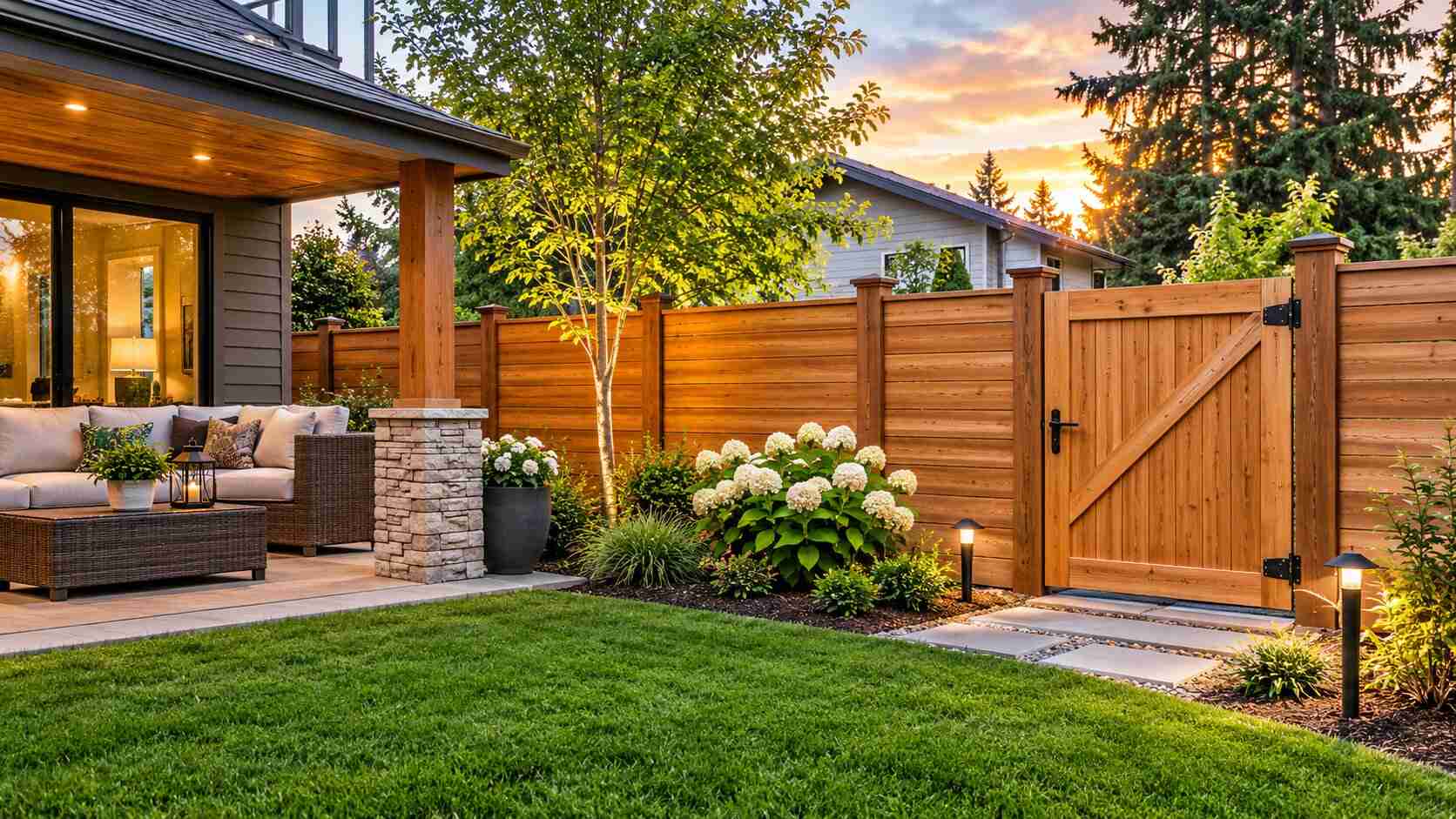
Plan a privacy fence by first deciding what it must screen, secure, or define, then verify the boundary, access points, site conditions, and applicable local requirements.
Choose the material and style after the layout is clear.
A drawing or photo concept can help compare appearances, but it cannot confirm property lines, buried utilities, easements, or the buildable route.
Start with the fence’s job
A fence may provide privacy from a nearby window, contain a pet, create a defined play area, screen a patio, or mark a boundary.
These goals can call for different levels of openness, gate sizes, and placement.
Write down the primary purpose before comparing styles so that appearance does not overwhelm practical needs.
Walk the yard from the house and from the street.
Mark patios, doors, paths, driveways, garden beds, trees, slopes, and areas where equipment must pass.
Consider whether a solid fence will block a view or make a small yard feel enclosed.
A gate should connect to a route people will actually use.
Check the route before selecting a style
| Site factor | Why it matters | What to confirm |
| Property boundary | A fence placed incorrectly can create a dispute | Boundary information and any easements |
| Slope | The fence line may step or follow the grade | How the finished lower edge will meet the ground |
| Gates | Access affects daily use and maintenance | Clear opening, swing direction, and approach path |
| Trees and planting | Roots and branches can affect placement | Clearance and future maintenance access |
| Utilities | Digging may encounter buried lines | Required utility locating before excavation |
Do not estimate the legal boundary from an old fence or an image.
Check reliable property information and obtain professional help if the line is uncertain.
Ask the local authority about current requirements for height, setbacks, corner visibility, and permits; these can vary by location and project.
Baca Juga
Compare materials for use and maintenance
Wood offers a familiar appearance and can be built in varied patterns, but it needs ongoing care suited to its exposure and finish.
Vinyl or other manufactured systems may reduce some routine upkeep, but color, repair options, hardware, and installation constraints differ by product.
Metal or open designs preserve sightlines but provide less visual screening.
Ask for product-specific maintenance guidance rather than assuming one material is maintenance-free.
The site matters as much as the material.
A sloped yard, wet area, narrow access, or existing retaining feature may influence the layout and installation method.
Ask how the proposal handles corners, gates, transitions, and the base of the fence.
Plan privacy without losing circulation
Draw the route from the house to the driveway, garden, trash area, or outdoor seating.
A privacy panel that blocks a useful route may create a daily inconvenience.
Consider partial screening, a return panel near a patio, or a more open section where access and visibility matter.
These choices should be evaluated on site, not inferred from a generic example.
For a project in Kent, Seattle, or a nearby Washington community, Intra Flooring’s fence installation and exterior wood structure services can be reviewed alongside the yard plan.
Bring boundary information, photos, intended gate locations, and the main purpose of the fence to a site discussion.
Include the transition and the maintenance plan
The fence line is only one part of the layout.
Decide how its ends meet the house, an existing wall, a driveway, or a garden feature.
Confirm who is responsible for connecting the fence to a gate, arbor, or other structure, and whether any adjacent repair is included.
A clear drawing or site sketch can help everyone discuss the same route.
Ask how the selected material should be cleaned, inspected, and maintained.
Consider whether the yard will need access for future painting, landscaping, or repairs.
If a fence is intended to screen a patio, view the design from both the seating area and the street so that privacy and curb appeal are considered together.
Common questions
How do I know where my fence can go?
Use reliable boundary information and check local rules for the property.
If the line or an easement is uncertain, consult a qualified survey or local professional before installation.
Should a privacy fence follow the slope?
The choice depends on the grade, design, and product system.
Ask the installer to explain how gaps, steps, ground clearance, and transitions will look along the full run.
Where should a fence gate go?
Place gates where they connect naturally to paths and service areas.
Confirm opening direction, usable clearance, and access for the people and equipment that will use them.
Does a fence need a permit?
Requirements vary by jurisdiction, fence height, location, and property conditions.
Check with the relevant local authority before work begins.
The practical takeaway
A fence plan is complete only when it accounts for purpose, boundary, slope, gates, access, and local requirements.
Choose the style after those constraints are understood.
That order helps prevent a visually attractive design from becoming difficult to use or install.
backyard landscaping tipsbackyard layout tipsbackyard privacy ideasboundary line checkfence gate placementfence installation guidefence layout guidefence material choicesfence permit guidefence planning stepsfence style ideasgarden fence planningoutdoor living privacyoutdoor screening ideasprivacy fence designproperty boundary planningvinyl fence optionswood fence maintenanceyard improvement guideyard planning tips
Artikel terkait lainnya