






Best Crypto Wallet Apps: What to Look for Before Choosing One
 DEMOCRAZY News
4 Mei 2026 8:39 pm
.
7 menit membaca
DEMOCRAZY News
4 Mei 2026 8:39 pm
.
7 menit membaca

A crypto wallet app is one of the most important tools for anyone who wants to use digital assets from a smartphone. It helps users store crypto, receive transfers, send funds, exchange assets, and manage their balance without relying only on desktop platforms or complex trading interfaces.
A practical example is crypto wallet app Trustee, which combines wallet functionality with in-app exchange, crypto purchases, fast transfers, card features, security tools, and additional options for everyday use. This type of app is useful for people who want more than simple crypto storage, but still prefer a clear mobile experience.

What Is a Crypto Wallet App?
A crypto wallet app is a mobile application that allows users to manage digital assets. Depending on the product, it may support storing, receiving, sending, buying, selling, or exchanging cryptocurrencies.
Some wallet apps are very basic. They mainly help users hold assets and send transactions. Others are more advanced and include exchange tools, price alerts, card functionality, and extra security settings.
For beginners, the most important thing is simplicity. A wallet app should not make basic actions difficult. Users should be able to check their balance, find their assets, receive crypto, and send funds without confusion.
For more active users, additional features matter. They may need support for several coins, different networks, faster transfers, transaction history, exchange tools, and better control over security.
Crypto Wallet App vs Crypto Exchange
A crypto wallet app and a crypto exchange are not the same thing.
A crypto exchange is mainly designed for buying, selling, and trading digital assets. It may offer charts, trading pairs, order books, and advanced tools. This can be useful for traders, but it may feel too complicated for everyday users.
A crypto wallet app focuses more on managing assets. It is where users can store crypto, receive funds, send transfers, and sometimes exchange assets inside the app.
Baca Juga
Many modern apps combine both approaches. They allow users to store crypto like in a wallet, but also buy or exchange assets without leaving the app. This can be more convenient for people who want to manage crypto from one place.
Key Features of a Good Crypto Wallet App
Supported Coins and Networks
Before choosing a wallet app, users should check which coins and networks it supports. This is especially important for people who work with stablecoins such as USDT or USDC.
Support for popular networks and methods can make transfers easier and more flexible. If users often receive crypto from different services, limited network support can become a problem.
Simple Sending and Receiving
Sending and receiving crypto should be clear. The app should show the correct asset, network, address, and transaction details before confirmation.
Crypto addresses are long and difficult to read, so any feature that simplifies transfers can be helpful. Some apps allow transfers by phone number or other user-friendly methods, which can make everyday crypto use much easier.
In-App Exchange
A good wallet app should help users exchange one asset for another without forcing them to move funds to another platform.
For example, users may want to exchange BTC to USDT, USDC to another coin, or one asset to a stablecoin. If this can be done inside the wallet app, the process becomes faster and more convenient.
Security Tools
Security is one of the most important factors when choosing a wallet app. Users should look for two-factor authentication, biometric login, passcodes, and other protection methods.
Some apps also offer additional privacy tools, such as hidden sub-accounts or special PIN options. These can be useful for users who want more control over how their balances are displayed or accessed.
Price Alerts
Crypto prices can change quickly. Price-change alerts can help users stay informed without checking charts all day.
This is useful not only for traders, but also for regular users who want to know when an asset reaches a certain price before buying, selling, or exchanging.
Transaction History and Filtering
A clear transaction history is important, especially for users who make many operations. It should be easy to find top-ups, exchanges, transfers, card payments, and referral rewards.
Filtering tools can save time and help users understand their financial activity better.
Extra Everyday Features
Some wallet apps also include card functionality, referral programmes, or fast nearby transfers. These features are not required for everyone, but they can make the app more useful in daily life.
Why Mobile Wallet Apps Are Popular
Mobile wallet apps are popular because they make crypto accessible at any time. Users can check their balance, receive funds, send crypto, or make an exchange directly from their phone.
This is especially useful for people who do not want to use a laptop or desktop exchange for every small transaction. A mobile app can be enough for many everyday actions.
Mobile wallets also make crypto feel more familiar. People are already used to mobile banking, payment apps, and digital wallets. A good crypto wallet app can offer a similar level of convenience while supporting digital assets.
For beginners, this can reduce the learning curve. For experienced users, it can save time.
What to Avoid When Choosing a Wallet App
Users should avoid downloading crypto wallet apps from unofficial sources. Fake apps and phishing links are a serious risk in crypto.
They should also be careful with apps that do not clearly show fees, exchange rates, or transaction details. Before confirming any action, the final amount should be visible.
Another warning sign is poor security. If an app does not offer basic protection like two-factor authentication or biometric access, users should be cautious.
It is also worth avoiding apps that promise unrealistic profits. A wallet app should help users manage crypto, not create false expectations about guaranteed income.
Trustee as a Practical Example
Trustee is an example of a mobile crypto wallet app that focuses on everyday use rather than only storage. Users can manage crypto, buy assets with Visa and Mastercard, exchange cryptocurrencies inside the app, and work with 30+ coins and popular networks or methods such as TRC20, ERC20, SOL, and NEAR.
The app also includes several convenience features. Transfers by phone number can make sending crypto easier, while Swipe to Send allows quick transfers to nearby Trustee Plus users without addresses or QR codes. Price-change alerts help users follow market movements without constantly checking charts, and transaction filtering makes it easier to find specific operations in the history.
Security is also part of the experience. Trustee Plus supports multi-level two-factor authentication, biometric access methods like Face ID, decentralized security protocols, and a Secret PIN feature for hidden sub-accounts.
The app also includes card functionality and a referral programme. Users can earn up to 45% of the fees from invited users’ exchanges, which may become an additional source of passive income for people who actively recommend the app.
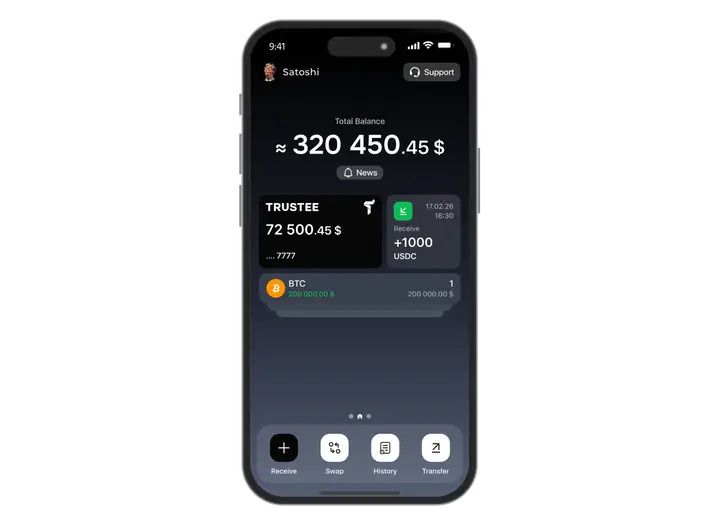
How to Install Trustee
Installing Trustee takes only a few minutes.
- Download and install the Trustee crypto wallet from the official app store.
- Register using a phone number, Apple ID, Google account, passkey, or Telegram.
- If you use a phone number, confirm it via a phone call or SMS.
- Enter the remaining details and start using the app.
After registration, users can access wallet tools, crypto purchases, in-app exchange, transfers, card features, price alerts, transaction history, and the referral programme.
Final Thoughts
A good crypto wallet app should make digital assets easier to manage from a smartphone. It should combine a clear wallet interface, supported assets, simple transfers, useful exchange tools, strong security, and transparent transaction details.
For beginners, simplicity is essential. For active users, features like price alerts, transaction filtering, fast transfers, and additional security tools can make a big difference.
Trustee is a practical example of a crypto wallet app built for everyday use. It combines wallet, exchange, purchase, transfer, card, security, and referral features in one mobile product, making it a convenient option for users who want to manage crypto without switching between several separate services.
asset managementbest crypto walletbitcoin walletblockchain walletcrypto exchangecrypto for beginnerscrypto guidecrypto paymentscrypto securitycrypto storagecrypto transactionscrypto wallet appdigital assetsethereum walletexchange vs walletfintechmobile wallet appsecure wallettrustee plususdt trc20
Artikel terkait lainnya