






Road Trips with Kids: Navigating Global Child Restraint Regulations
 DEMOCRAZY News
30 Juni 2026 10:06 pm
.
12 menit membaca
DEMOCRAZY News
30 Juni 2026 10:06 pm
.
12 menit membaca
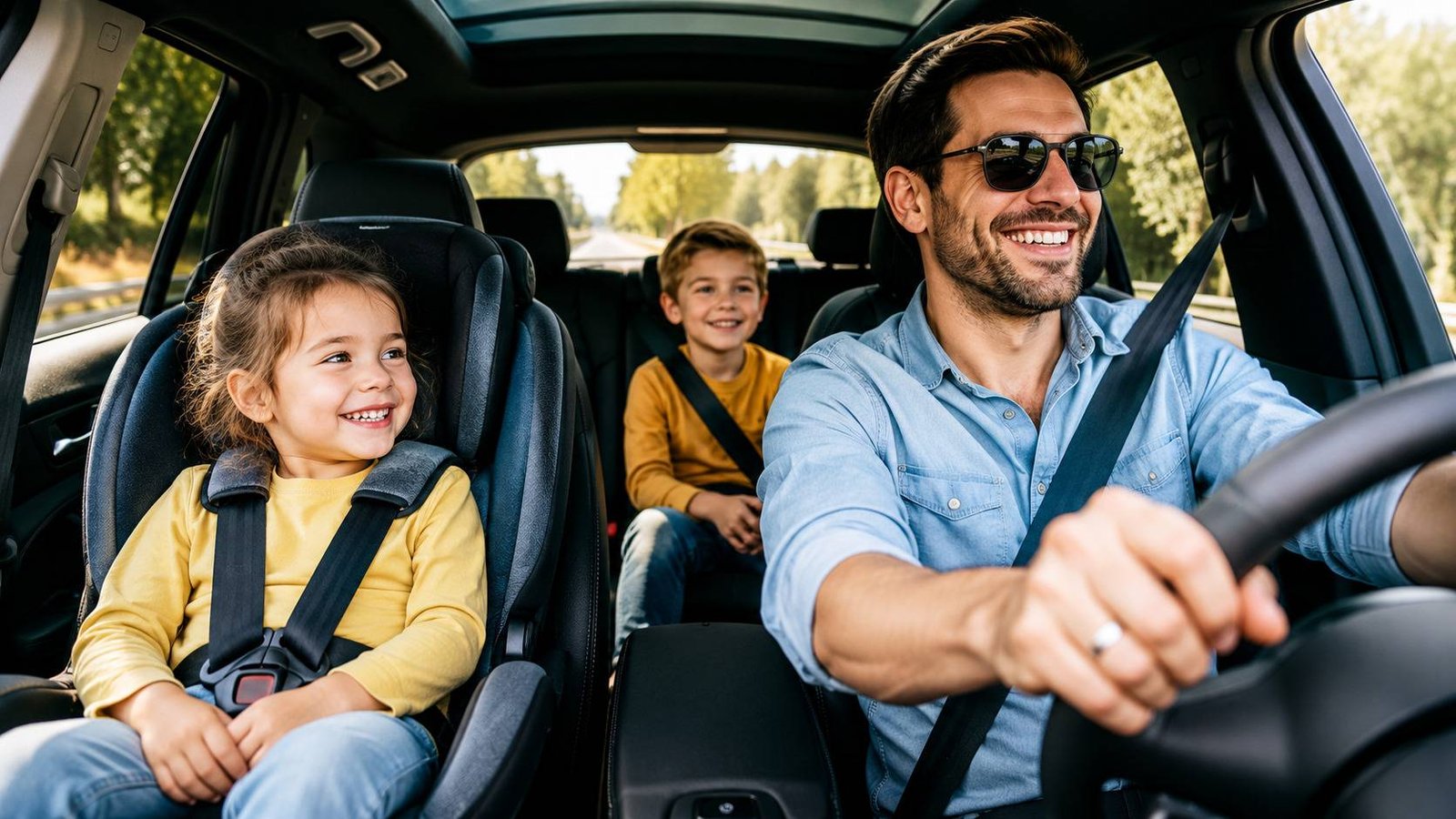
Driving with Children: Best Practices, Safety Tips, and Legal Requirements
Traveling with children is a rewarding experience that creates lifelong family memories, but it also demands meticulous planning, especially when it comes to highway safety.
Ensuring your little ones are securely fastened in the vehicle involves much more than just clicking a seat belt; it requires a deep understanding of local traffic regulations and evolving safety standards.
Whether you are driving across state lines or renting a car in a foreign country, being aware of how different regions enforce passenger safety is essential to protect your family and avoid heavy penalties.
This guide provides an all-inclusive breakdown of global restraint requirements to give you complete peace of mind on your next family adventure.

Why Child Road Safety Cannot Be Compromised
Every year, millions of families around the world pack their vehicles for road trips, weekend getaways, or simple daily commutes. While these journeys are often filled with excitement and anticipation, they also carry an inherent risk. Road traffic injuries remain a leading cause of death for children and young adults globally.
According to data from the World Health Organization (WHO) and various traffic safety administrations, the proper use of child restraint systems (CRS)—commonly known as child car seats—drastically reduces the risk of death and severe injury in the event of a collision. Specifically, infant seats reduce the risk of injury by up to 71% for infants, while toddler seats reduce it by 54% for children aged 1–4 years.
Despite these clear, life-saving statistics, navigating the legalities and practicalities of child car seats can be incredibly overwhelming for parents. Laws vary significantly across borders, and even within specific regions, regulations shift based on a child’s age, weight, and height. When preparing an international vacation or cross-border trip, understanding Country wise Child seat laws becomes a critical aspect of travel preparation.
This comprehensive guide serves as an exhaustive resource for parents, guardians, and travelers. We will break down the essential mechanics of child car seats, provide a detailed analysis of country-wise child seat laws across major global destinations, and offer invaluable tips for making road travel with children as safe, legal, and stress-free as possible.
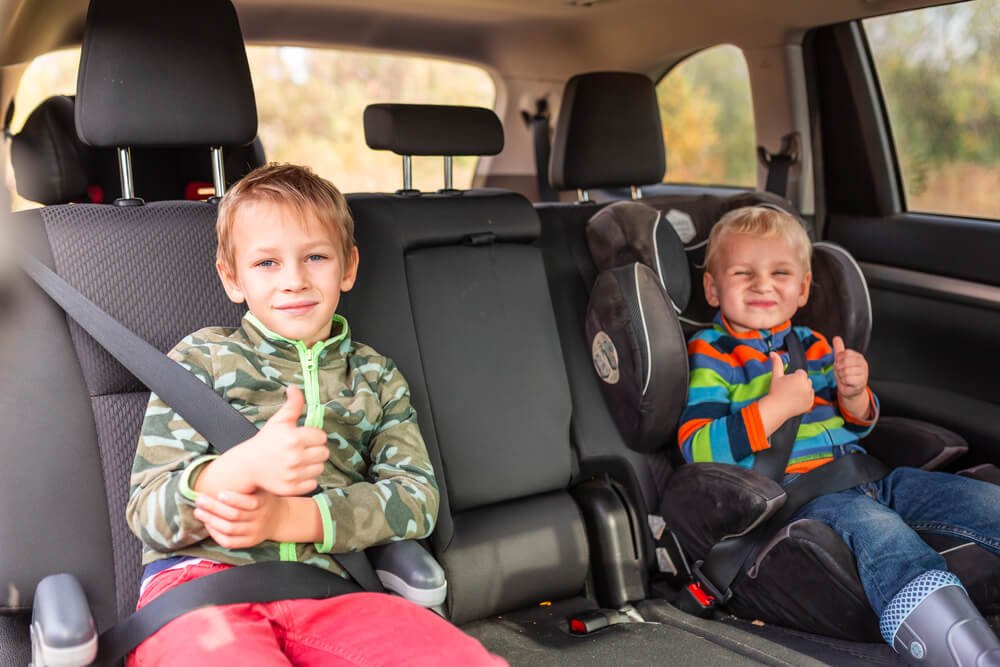
1. The Anatomy of Child Restraints: Understanding the Phases
Before exploring regional laws, it is vital to understand the fundamental types of child car seats available and why they are designed the way they are. Children’s bodies are fragile; their bones are still developing, and their heads are disproportionately heavy compared to their bodies. Standard adult seat belts are designed for mature skeletal structures and can cause severe internal injuries to a young child during a crash.
Phase 1: Rear-Facing Car Seats (Infants and Toddlers)
Rear-facing seats are designed for the youngest passengers. In a head-on collision (the most common and dangerous type of crash), a rear-facing seat cradles the child’s head, neck, and spine, distributing the impact forces evenly across the entire shell of the seat.
-
Best Practice: Safety experts recommend keeping children rear-facing for as long as possible, typically until they reach the maximum weight or height limit specified by the car seat manufacturer, which often happens around age 2 to 4.
Phase 2: Forward-Facing Car Seats (Toddlers and Preschoolers)
Once a child outgrows their rear-facing seat, they transition to a forward-facing seat equipped with an internal 5-point harness. The 5-point harness secures the child at the shoulders, hips, and between the legs, anchoring them tightly to the vehicle framework.
-
Best Practice: Keep the child in a 5-point harness until they reach the absolute upper limits of the seat, usually between 40 to 65 pounds (18 to 30 kg), depending on the model.
Phase 3: Booster Seats (School-Aged Children)
Booster seats do not have built-in harnesses; instead, they “boost” the child up so that the vehicle’s adult lap-and-shoulder belt fits correctly across their strongest skeletal points: the center of the chest and the bony hips.
-
Best Practice: A child is not ready for a standard vehicle seat belt alone until they pass the “5-Step Test,” which generally occurs when they reach 4 feet 9 inches (145 cm) tall and are between 8 and 12 years old.
Phase 4: Adult Seat Belts
The final stage is the standard adult seat belt. The lap belt must sit low across the upper thighs/hips (not the soft abdomen), and the shoulder belt must cross the middle of the chest and shoulder (not the neck or face).
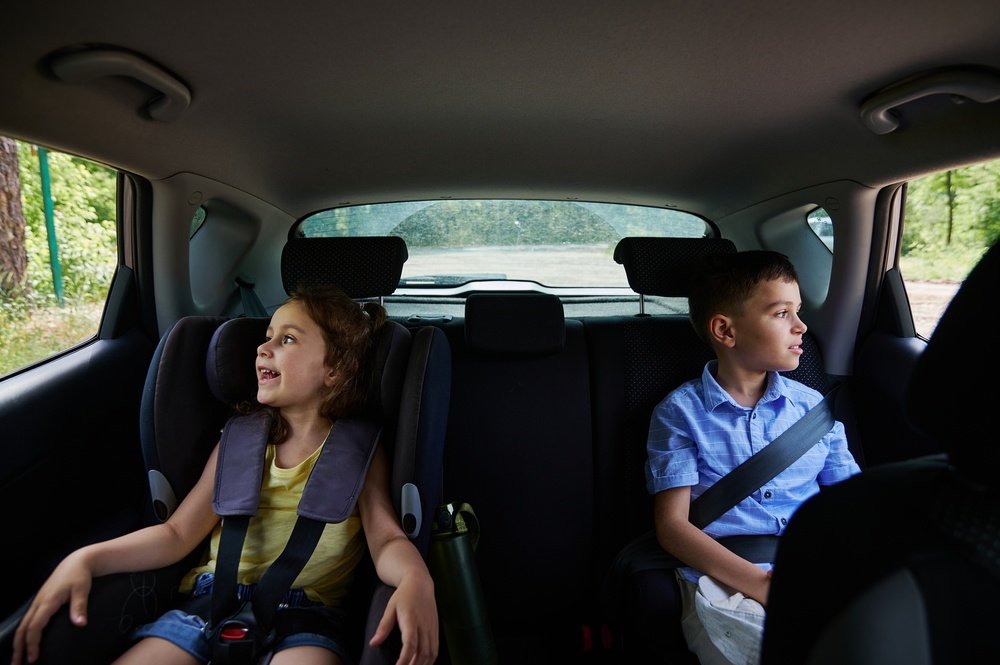
2. Country-Wise Child Seat Laws: A Global Analysis
When traveling internationally, ignorance of local traffic laws is never an acceptable excuse for law enforcement. Different jurisdictions adhere to distinct regulatory frameworks. Below is a detailed look at how child car seat laws are structured in various parts of the world.
United States: A Fragmented System
In the United States, there is no single federal law governing the day-to-day use of child car seats; instead, regulations are determined at the state level. While all 50 states mandate child restraints, the specifics vary wildly.
-
Rear-Facing Mandates: An increasing number of states (such as California, New York, Pennsylvania, and Illinois) have enacted laws strictly requiring children to remain rear-facing until at least their second birthday.
-
Booster Seat Thresholds: Some states require booster seats until age 6, while others extend the mandate to age 8 or 9, or until the child reaches a height of 4 feet 9 inches.
-
Fines and Penalties: Violations can result in hefty monetary fines, moving violation points on a driver’s license, and mandatory traffic safety courses.
-
Federal Standards: All seats sold in the US must meet Federal Motor Vehicle Safety Standard 213 (FMVSS 213).
United Kingdom: Height-Based Adjustments and i-Size
The UK features uniform, highly stringent rules governing child restraint systems. The law states that children must use a child car seat until they are 12 years old or reach 135 centimeters (approx. 4 feet 5 inches) in height, whichever comes first.
-
The Transition to R129 (i-Size): The UK recognizes two safety standards: ECE R44 (weight-based) and the newer ECE R129 (i-Size, which is height-based). Under i-Size regulations, children must remain in a rear-facing seat until they are at least 15 months old.
-
Exemptions: Licensed taxis and minicabs are a rare exception. If a correct child car seat is unavailable, children under 3 can travel without one, but they must sit in the rear seats without a seat belt. Children aged 3 or older can travel using the adult seat belt. However, this is strictly for unexpected, short journeys in commercial vehicles.
European Union: Stricter Height Limits
Most European Union countries follow safety protocols closely aligned with the UK, though many take safety parameters a step further regarding height requirements.
-
The 150 cm Standard: In nations like Germany, Austria, Italy, and the Netherlands, the statutory height threshold for mandatory car seat or booster seat usage is 150 centimeters (approx. 4 feet 11 inches) rather than the UK’s 135 cm.
-
Front Seat Restrictions: Across most of the EU, placing a rear-facing infant seat in the front passenger seat is strictly illegal unless the front passenger airbag has been completely deactivated. Failure to do so can result in catastrophic injuries if the airbag deploys.
-
Isofix Uniformity: The EU pioneered the ISOFIX system, a global standard for anchoring points built directly into the vehicle chassis, making proper installation much easier and reducing human error.
Australia: Rigid Age Brackets
Australia maintains some of the strictest and most clearly defined child restraint laws globally, managed under Australian Standard AS/NZS 1754. Unlike other regions where weight or height determines legal transitions, Australia relies heavily on rigid chronological age milestones:
-
Under 6 Months: Must be secured in an approved, properly fastened rear-facing restraint.
-
6 Months to 4 Years: Must be secured in either a rear-facing or a forward-facing restraint with an inbuilt harness.
-
4 Years to 7 Years: Must be secured in an approved forward-facing restraint with an inbuilt harness or an approved booster seat secured by an adult seat belt.
-
7 Years and Older: Can use a standard adult seat belt if they fit properly, though safety bodies recommend staying in a booster until passing the height test.
-
Import Restrictions: It is illegal to import or use a foreign car seat (including US or European approved seats) in Australia unless it explicitly bears the Australian Standard AS/NZS 1754 sticker.
Canada: Severe Weather and Provincial Variance
Similar to its southern neighbor, Canada leaves specific highway traffic acts to its provinces and territories, but all seats must comply with Canada Motor Vehicle Safety Standards (CMVSS).
-
Deactivation of Airbags: Similar to Europe, front seat placements are heavily restricted.
-
Provinces Like Ontario: Children must use a rear-facing seat until they weigh 9 kg (20 lbs), a forward-facing seat until 18 kg (40 lbs), and a booster seat until they reach 8 years of age, weigh 36 kg (80 lbs), or stand 145 cm tall.
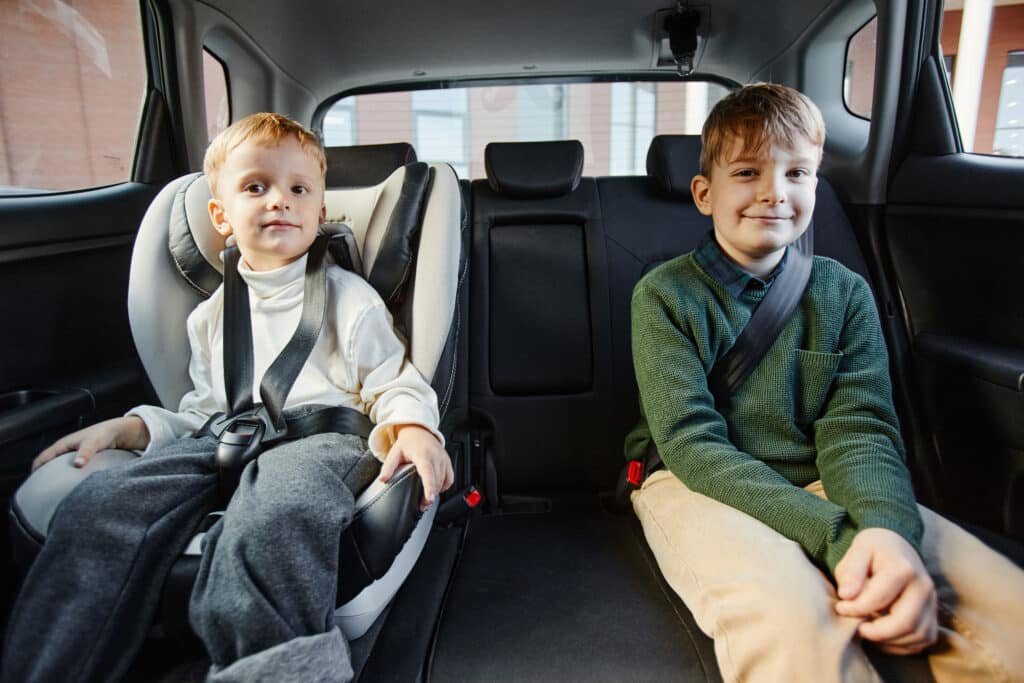
3. The Pitfalls of International Travel: What Every Parent Needs to Know
When planning an overseas trip, parents often run into logistical hurdles involving child restraints. Here is how to navigate the complexities smoothly:
Should You Bring Your Own Car Seat?
While bringing a familiar car seat from home provides comfort, it may not be legally compliant in your destination country. For instance, using an American latch-system seat in Europe or Australia might technically break local laws because the testing criteria and certification labels differ.
Conversely, renting a car seat from a car rental agency can be hit-or-miss; you may be handed an outdated, poorly maintained, or unhygienic seat without a proper instruction manual.
-
Pro-Tip: If you choose to bring your own seat, verify if it is certified for aircraft use (FAA approved in the US, or with a “For Use in Aircraft” sticker internationally). Using a car seat on the airplane seat keeps your child safe during unexpected turbulence and ensures your seat arrives undamaged.
Taxis and Rideshares (Uber/Lyft)
Many international travelers rely heavily on rideshares and public transport. Do not assume these services are exempt from safety laws. While some urban centers exempt traditional medallion taxis from car seat requirements, the laws of physics do not change just because a vehicle is a taxi.
A crash at 50 km/h can eject an unrestrained child through a windshield just as easily in a taxi as in a personal vehicle. Apps like Uber offer “Uber Car Seat” options in select major metropolitan areas, but availability can be limited.
4. Crucial Installation Mistakes and Best Practices
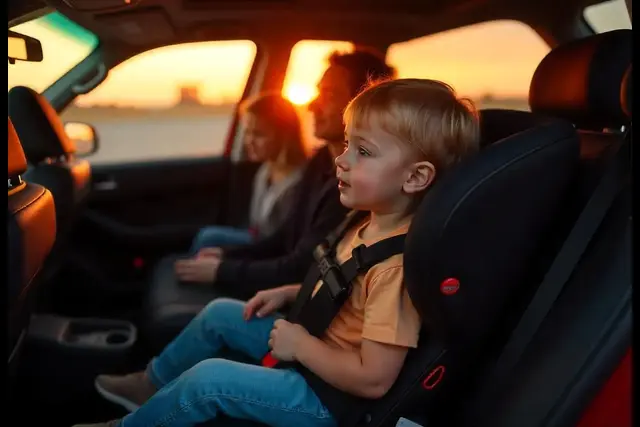
A car seat is only effective if it is installed correctly. Studies show that over 50% of all child car seats are installed incorrectly, compromising their protective features.
-
The Pinch Test: Once your child is buckled into their harness, try to pinch the webbing of the strap at their shoulder. If you can pinch any excess fabric between your fingers, the harness is too loose. It should be snug, fitting flat against the child’s body.
-
The 1-Inch Wiggle Test: Grab the car seat at the base near the vehicle anchor path and try to shake it side-to-side and front-to-back. The seat should not move more than one inch (2.5 cm) in any direction.
-
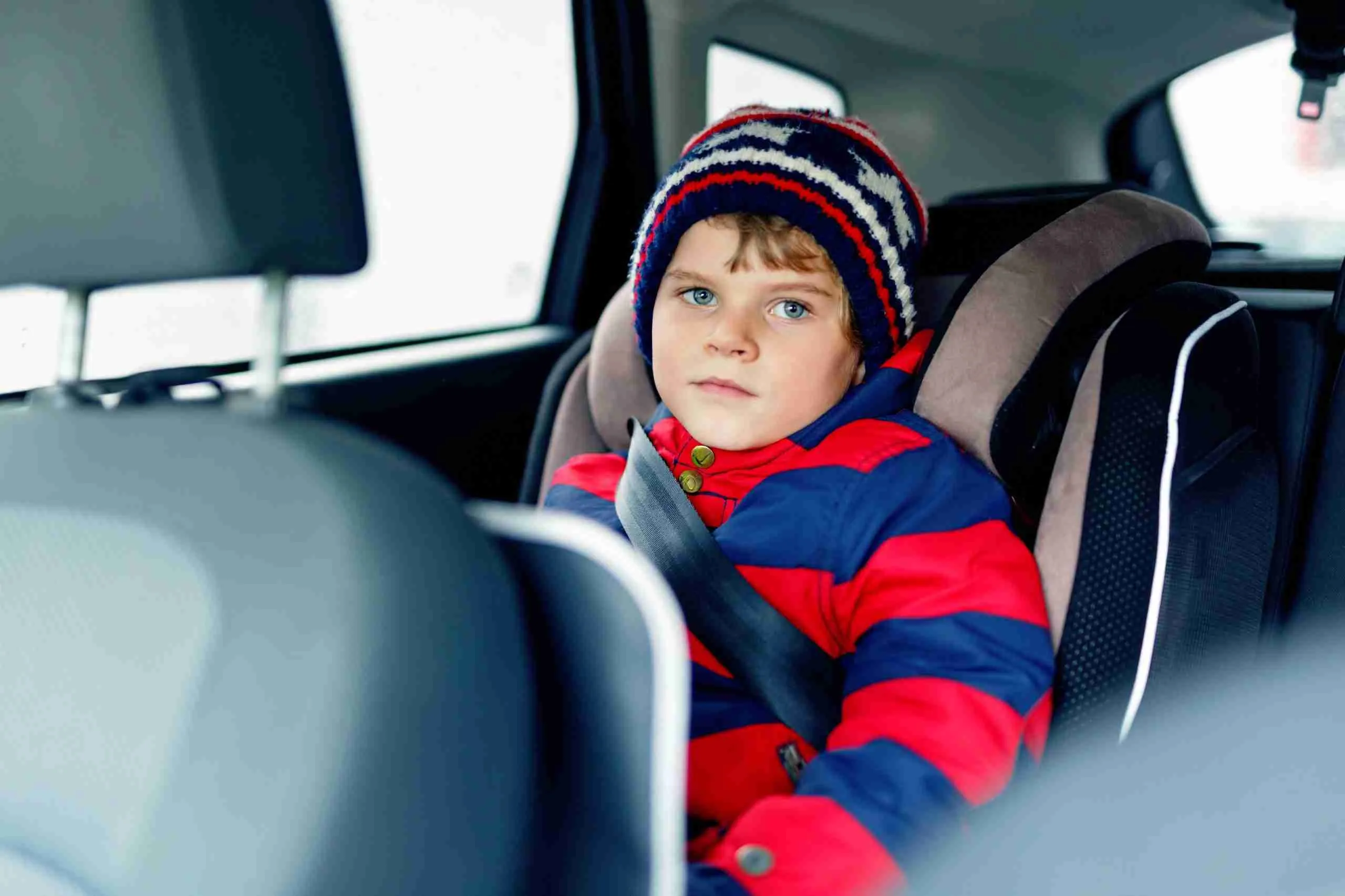
The Danger of Winter Coats: Never place a child into a car seat wearing a bulky winter coat or snowsuit. In a crash, the fluffy material instantly compresses under the force, leaving the harness far too loose and risking ejection. Instead, dress your child in thin, warm layers, secure the harness tightly, and drape a blanket over the top of the buckled harness.
-
Beware of Secondhand Seats: Avoid purchasing or using a used car seat from thrift stores or online marketplaces unless you know its full history. Car seats have strict expiration dates (usually 6 to 10 years from the manufacture date due to plastic degradation) and must be discarded immediately if they have been involved in a moderate-to-severe vehicular accident.
5. Survival Tips for Long Road Trips with Kids
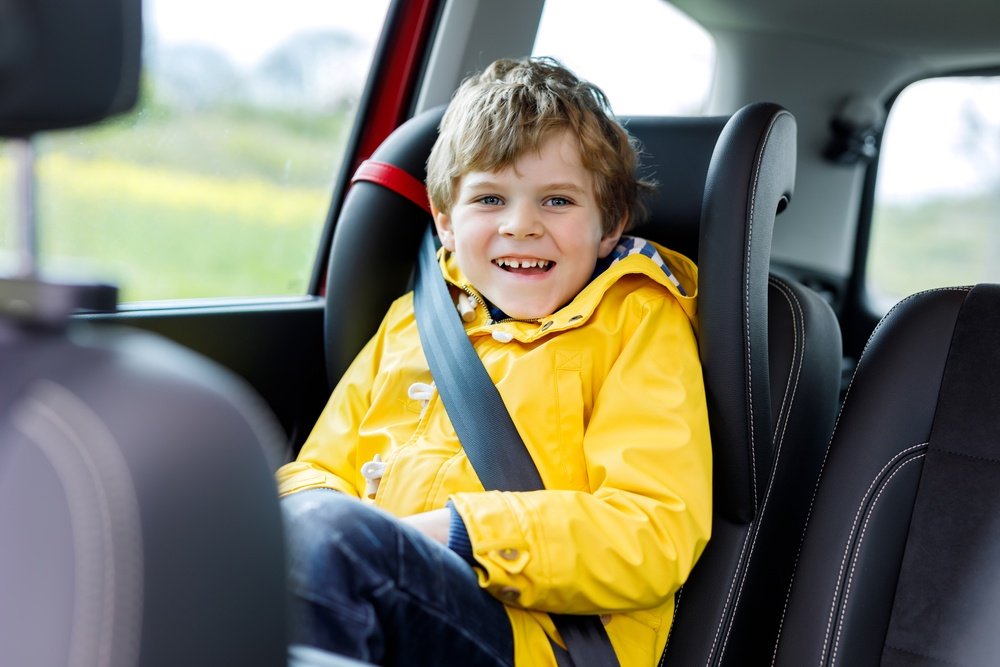
Beyond the strict legalities of Country wise Child seat laws, managing the psychological and physical well-being of young passengers during a long drive is essential for safety. A distracted driver is a dangerous driver.
-
Plan Strategic Breaks: Avoid driving for more than two consecutive hours without stopping. Babies should not spend prolonged periods in a car seat due to the risk of positional asphyxiation and strain on their developing spines. Get everyone out of the car to stretch, walk, and release built-up energy.
-
Pack a Safe Entertainment Kit: Avoid hard plastic toys, heavy books, or metal objects that could become lethal projectiles inside the cabin during a sudden hard brake. Opt for soft fabric books, plush toys, or window gel clings.
-
Manage Motion Sickness Proactively: Keep the vehicle cabin cool, fresh, and well-ventilated. Have a cleanup kit easily accessible (wet wipes, spare clothes, disposal bags, and towels) in the main cabin rather than buried deep in the trunk.
-
Prioritize Hydration and Non-Choking Snacks: Avoid feeding children small, round foods (like whole grapes, nuts, or hard candies) while the vehicle is in motion, as a sudden bump could cause choking. Stick to easily dissolvable snacks and spill-proof water bottles.

Conclusion: Prioritizing Child Safety Globally
Ultimately, child car seat laws are not put in place to inconvenience parents or serve as a source of revenue for traffic enforcement. They are backed by rigorous scientific testing, biomechanical engineering, and real-world crash data aimed at protecting the most vulnerable passengers on our roads.
Whether you are driving a few blocks down to the local supermarket or mapping out a vast road trip across international borders, staying informed about regional legislation and committing to best safety practices ensures your family arrives safely at every destination.
and Legal Requirementsbooster seat rulescar seat installationcar seat lawschild passenger safetychild restraint standardschild safety measuresDriving with Children: Best Practicesdriving with toddlersfamily road tripfamily vacation prepglobal travel tipshighway safety regulationsinfant travel tipsinternational travel with kidsisofix guideparent travel hacksrear facing restraintsroad travel safetyroad trip with kidsSafety Tipstemporary traffic regulationsvehicle anchor systems
Artikel terkait lainnya