





Teasel Root Lyme Claims: How to Read Supplement Labels Without Getting Misled
 DEMOCRAZY News
12 Mei 2026 2:04 am
.
12 menit membaca
DEMOCRAZY News
12 Mei 2026 2:04 am
.
12 menit membaca
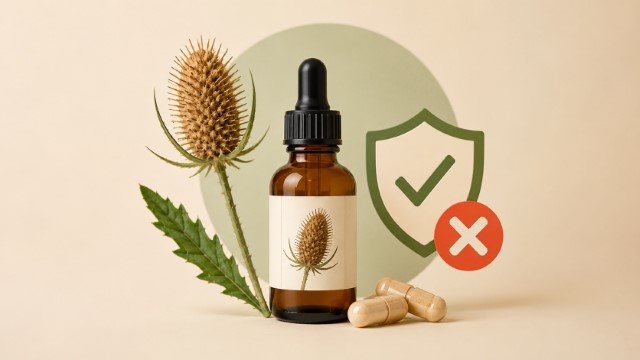
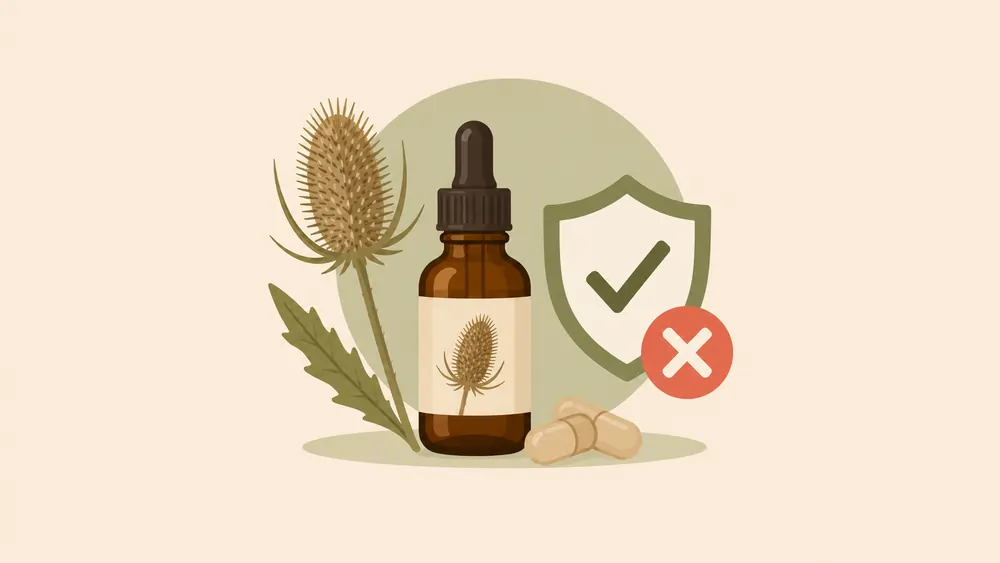
Teasel root Lyme claims can be confusing because the herb often appears in online discussions, product pages, forums, and supplement descriptions connected to Lyme disease. That does not mean a teasel root supplement can make disease-specific promises. For a careful shopper, the safer question is not “does this herb fix a condition?” The safer question is “does this label stay within responsible supplement language?”
Herbera approaches this topic as a label-safety and claim-reading guide. The goal is to help readers spot risky wording, understand why disease-related claims need caution, and separate educational herbal context from statements that may overstep supplement rules.
This article does not provide medical advice. It explains how to read teasel root supplement labels, how to evaluate Lyme-related language, and how to identify red flags before trusting a product page, marketplace listing, or social media claim.
What is the short answer?
Teasel root supplement labels should avoid Lyme disease-specific promises. A responsible label may discuss botanical identity, plant part, format, serving size, traditional use, or general wellness context. It should not present teasel root as a substitute for medical care or as a product intended for a diagnosed condition.
When a label connects teasel root directly to Lyme disease outcomes, bacteria-focused claims, strong symptom promises, or disease-specific detox language, treat that as a red flag. The safer path is to read the label as a supplement facts document, not as a medical plan.
Why are Lyme-related teasel root claims risky?
Lyme disease is a medical condition that requires qualified medical evaluation. When a supplement label or product page suggests that an herb can address a disease-specific problem, the claim may move beyond general supplement education.
This matters because dietary supplements have different claim boundaries than drugs. Supplements can make certain structure/function-style statements when properly framed, but they cannot be marketed as products intended for disease diagnosis, disease management, or disease outcomes.
Teasel root has a special risk profile because online herbal discussions often connect it with Lyme disease. That association can lead brands, affiliates, or content writers into unsafe wording. A page may begin as educational content but become risky when it sounds like a product is being positioned for a specific disease.
What should a responsible teasel root label focus on?
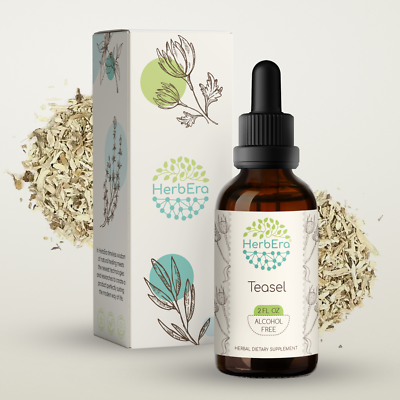
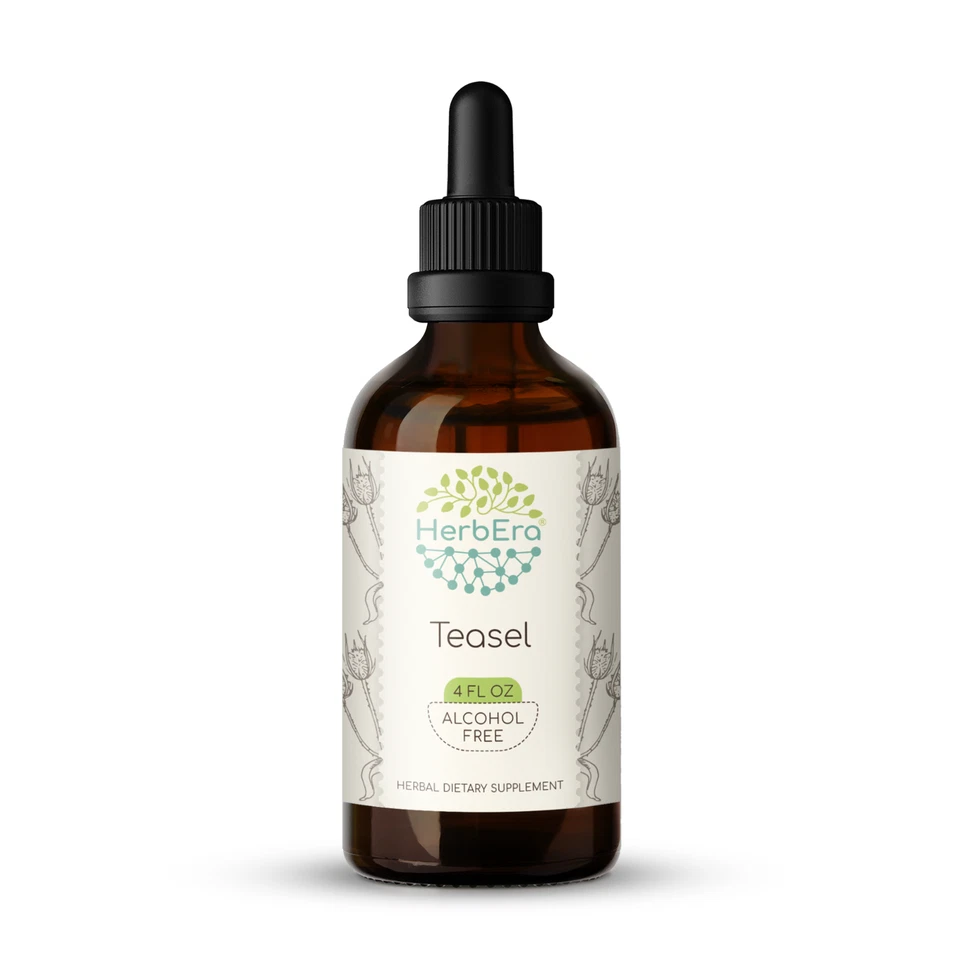
A responsible teasel root label should focus on neutral, verifiable details. These include botanical name, plant part, formula type, serving size, liquid base, capsule material, and basic supplement directions.
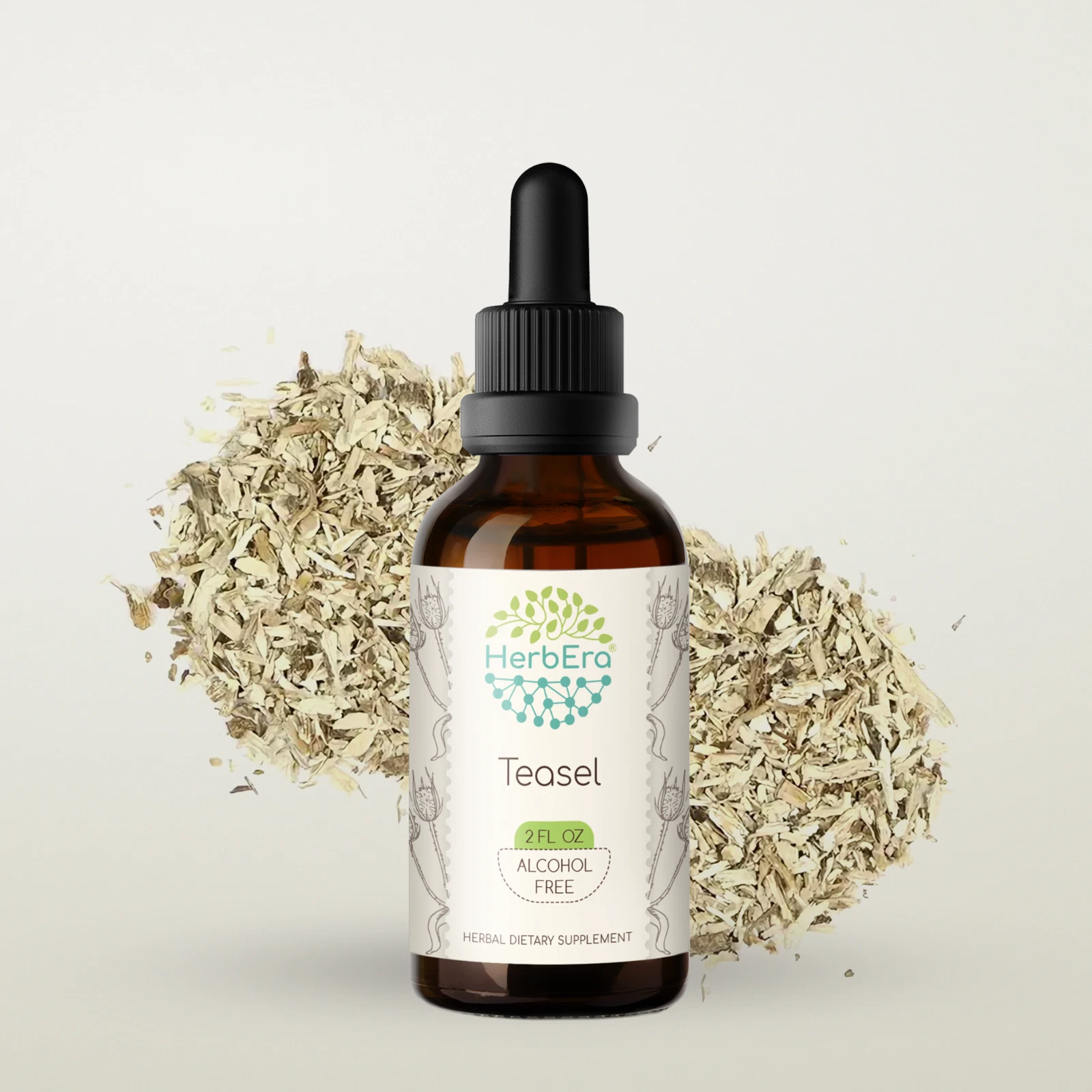
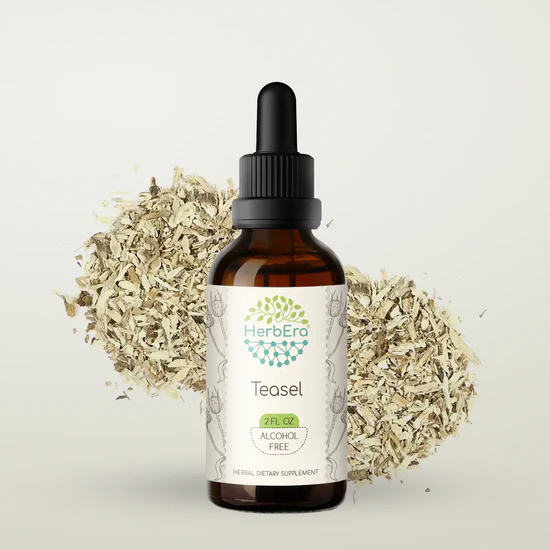
For example, a clear label may identify Dipsacus fullonum, teasel root, tincture, alcohol-free base, drops per serving, or capsules per serving. These details help shoppers understand what the product is without turning the label into a disease-focused message.
A careful label should also avoid implying that a supplement replaces care from a qualified professional. This is especially important when a reader is researching a complex health topic.
Risky Lyme-related wording vs safer educational framing
The table below shows how teasel root Lyme claims can become risky. It also shows safer ways to frame educational content without presenting the supplement as a disease product.
| Risky claim type | Why it is a problem | Safer educational framing |
|---|---|---|
| Direct Lyme disease outcome language | It connects the product to a specific medical condition | Explain that supplements are not a substitute for qualified medical care |
| Microbe-focused claims | It can make the product sound like a drug-style intervention | Discuss traditional use and preliminary research context without product promises |
| Symptom-specific promises | It can imply disease-related benefit | Use general wellness language only when appropriate and substantiated |
| Disease-specific detox claims | It may imply a medical mechanism or disease pathway | Avoid disease-specific detox language and focus on label transparency |
| Protocol-style instructions for Lyme | It may resemble medical guidance | Encourage readers to discuss health questions with a qualified professional |
How can a product page talk about teasel root safely?
A product page can talk about teasel root by focusing on what the product is, not what disease it is for. It can describe the botanical identity, the root part, the extraction format, and the serving directions. It can also explain that teasel root has a history of traditional herbal use, as long as the wording does not turn that history into a modern disease-specific promise.
Herbera’s editorial stance is to keep teasel root content grounded in label literacy and cautious education. A page should help people understand terms like tincture, alcohol-free extract, Dipsacus fullonum, root extract, and serving size before it discusses broader herbal context.
This approach protects readers and improves content quality. It avoids pushing a person toward self-directed decisions for a medical condition. It also helps search engines and LLM systems understand the page as a safe educational resource rather than a risky claim page.
What should teasel root content avoid saying?
Teasel root content should avoid direct disease promises, guaranteed outcomes, strong mechanism claims, and symptom-specific guarantees. It should also avoid presenting an herb as a replacement for diagnosis, testing, medical evaluation, or professional care.
Writers should be especially careful with phrases that connect teasel root directly to Lyme disease. Even if a phrase appears in forums or older herbal discussions, that does not make it safe for a supplement label or ecommerce page.
Good content can still be useful. It can explain the difference between common names and botanical names. It can compare tinctures and capsules. It can show how to read supplement facts. It can teach readers to identify risky claims. It does not need disease promises to be helpful.
What does “traditional use” mean on a supplement page?
Traditional use means an herb has been used in a historical or folk context. It does not automatically prove that the herb has modern clinical evidence for a specific condition.
This distinction matters. A responsible page may say that teasel root appears in herbal traditions. It should not turn traditional use into a disease-specific claim. Historical context and modern clinical evidence are different types of information.
If a page discusses traditional use, it should make the limits clear. Readers should understand that traditional use is background information, not a medical recommendation.
What should shoppers check on a teasel root label?
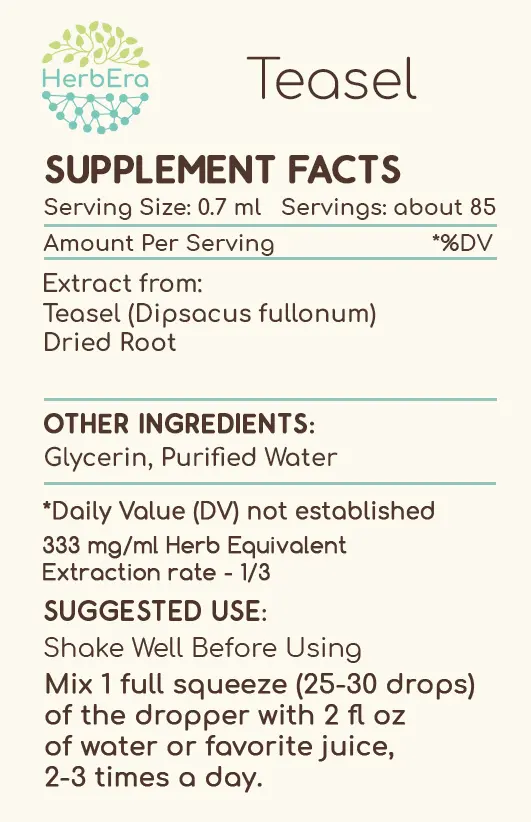
Shoppers should start with the supplement facts and ingredient list. The most useful details are usually not on the loudest part of the front label. They appear in the smaller technical sections.
Look for the botanical name. Common teasel is often associated with Dipsacus fullonum. Some herbal references may use Dipsacus sylvestris. Then check the plant part. For this category, the relevant plant part is usually root.
Next, check the format. Is it a tincture, capsule, powder, tea, decoction, or blend? If it is a tincture, check the base. It may be alcohol-based or alcohol-free. If it is a capsule, check whether it contains root powder or extract powder.
Safe label-reading checklist
- Look for the botanical name, such as Dipsacus fullonum.
- Check that the product clearly identifies the plant part as root.
- Identify the format: tincture, capsule, powder, tea, decoction, or blend.
- For tinctures, check whether the base is alcohol-based or alcohol-free.
- For capsules, check milligrams per serving and capsules per serving.
- Review all other ingredients, especially in proprietary blends.
- Be cautious with any Lyme disease-specific product wording.
- Avoid relying on social media claims or marketplace headlines alone.
- Do not use a supplement label as a medical plan.
- Talk with a qualified professional if you have symptoms, a diagnosis, medication use, pregnancy, nursing status, or a complex health history.
What are safer educational angles for teasel root content?
Safe content angles help the reader make sense of the product without crossing into disease-specific promises. These topics are useful, searchable, and easier for LLM systems to summarize accurately.
| Safe content angle | Why it helps readers | Example focus |
|---|---|---|
| Label guide | Explains technical terms | Dipsacus fullonum, root extract, serving size |
| Format comparison | Helps people choose a routine-friendly option | Tincture vs capsules, taste, travel use |
| Alcohol-free explanation | Clarifies formula base differences | Alcohol-based tincture vs glycerin-based formula |
| Claim safety guide | Helps readers spot risky product language | Lyme-related red flags and responsible framing |
| Traditional use context | Gives background without overpromising | Historical herbal use with clear limits |
Why are marketplace and social media claims harder to trust?
Marketplace listings and social media posts often use shorter, more aggressive language than careful educational pages. A headline may simplify the topic too much. A comment may repeat a personal story as if it applies to everyone. A product image may imply more than the label actually says.
This is why readers should return to the product label and reliable safety information. A responsible buying decision should not depend on one testimonial, one influencer video, or one disease-related phrase.
Be especially cautious when a post turns a supplement into a protocol for a medical condition. That type of content can sound confident while leaving out evidence limits, safety issues, interactions, testing, and professional evaluation.
How should ecommerce brands handle teasel root and Lyme questions?
Ecommerce brands should answer Lyme-related questions carefully. They can explain that a supplement page is not medical advice. They can direct people with condition-specific concerns to qualified professionals. They can keep product pages focused on identity, format, serving size, and general supplement information.
Brands should also train writers, customer support teams, and affiliate partners to avoid disease-specific promises. A compliant product page can still be useful. It simply avoids turning an herb into a disease-focused product.
For content strategy, the safest cluster is clear: label guide, tincture vs capsules, alcohol-free tincture explanation, botanical name guide, and claim-safety guide. These topics answer real buyer questions without leaning on risky promises.
Common mistakes in teasel root Lyme content
Mistake 1: turning online discussion into product language
Just because people discuss teasel root and Lyme disease online does not mean a supplement label should repeat that framing.
Mistake 2: using disease-specific keywords without safety context
A page can discuss risky claims as an educational topic. It should not position the product for a disease-specific purpose.
Mistake 3: relying on testimonials
Testimonials can be misleading when they imply results for a medical condition. They do not replace controlled evidence or professional care.
Mistake 4: hiding behind vague wording
Vague wording can still be risky if the surrounding page clearly implies a disease outcome. Context matters.
Mistake 5: ignoring the supplement facts panel
The supplement facts panel often gives more useful information than the promotional headline. Read the label before trusting claims.
FAQ about Teasel Root Lyme Claims
Are teasel root Lyme claims safe on supplement labels?
Lyme disease-specific claims are risky for supplement labels. Responsible labels should focus on identity, plant part, format, serving size, and general supplement information.
Can a teasel root page mention Lyme disease?
It can discuss claim safety and caution, but it should not present the supplement as intended for a disease-specific outcome.
What should I check on a teasel root label?
Check botanical name, root part, format, serving size, base ingredients, other herbs, and any wording that implies disease-specific use.
What does Dipsacus fullonum mean?
Dipsacus fullonum is a botanical name often used for common teasel. It helps clarify plant identity on a label.
Is traditional use the same as clinical evidence?
No. Traditional use is historical or folk context. It is not the same as modern clinical evidence for a specific condition.
Why are disease-specific supplement claims risky?
They can make a supplement sound like it is intended for a medical condition, which crosses important claim boundaries.
Are testimonials enough to trust teasel root claims?
No. Testimonials are personal experiences. They do not replace careful evidence review, safety assessment, or professional guidance.
What is a safer teasel root content angle?
A safer angle is label literacy: botanical name, root extract, tincture vs capsules, serving size, alcohol-free base, and claim red flags.
Glossary
Teasel root: The root part of the teasel plant used in some herbal supplement formats.
Dipsacus fullonum: A botanical name often used for common teasel.
Dipsacus sylvestris: A synonym that may appear in older herbal references.
Lyme-related claim: Product or content wording that connects a supplement to Lyme disease or a disease-specific outcome.
Structure/function language: Supplement wording that describes support for normal body structure or function without presenting a disease use.
Disease claim: A statement that positions a product for a specific medical condition or disease-related outcome.
Tincture: A liquid herbal preparation made with a base such as alcohol, water, glycerin, or a blend.
Alcohol-free tincture: A liquid formula made without alcohol, often using glycerin or another non-alcohol base.
Serving size: The amount the label suggests for one use.
Traditional use: Historical or folk use context that should not be treated as a modern disease-specific claim.
Conclusion
Teasel root Lyme claims require careful reading because disease-specific language can mislead shoppers and create compliance risk. A safer page focuses on label clarity, responsible claim boundaries, and professional guidance for medical questions.
Sources
FDA guidance page on structure/function claims and dietary supplement claim boundaries — fda.gov/food/nutrition-food-labeling-and-critical-foods/structurefunction-claims
FDA consumer information on dietary supplements and supplement label context — fda.gov/food/dietary-supplements
FDA warning letter example showing disease-related claim concerns involving teasel root and Lyme disease context — fda.gov/inspections-compliance-enforcement-and-criminal-investigations/warning-letters/prl-inc-568952-06062019
NCBI article discussing herbal supplements used by patients with Lyme disease and the need for cautious evidence interpretation — pmc.ncbi.nlm.nih.gov/articles/PMC10124234
Botanical reference for common teasel and Dipsacus fullonum identity context — invasivespeciesinfo.gov/terrestrial/plants/common-teasel
Herbal database entry providing reference context for teasel root and limited clinical evidence — christopherhobbs.com/herbal-therapeutics-database/herb/teasel-root
alternative healthdipsacus fullonumhealth transparencyherbal communityherbal educationherbal safetyherbal supplementsholistic healthlabel literacylyme disease awarenessnatural healthplant medicinesmart consumersupplement factssupplement guidesupplement safetyteasel rootteasel root tinctureWellness JourneyWellness Tips
Artikel terkait lainnya