


What Really Drives the Cost of a Hair Transplant
 DEMOCRAZY News
11 Oktober 2026 3:54 am
.
3 menit membaca
DEMOCRAZY News
11 Oktober 2026 3:54 am
.
3 menit membaca

Hair transplant prices vary more than almost any other cosmetic procedure. Two clinics in the same city can quote figures that differ several times over, and offers abroad add another layer of comparison.
Understanding what sits behind the number helps you judge whether a quote is fair or too good to be true.
The number of grafts
The main cost driver is how many follicular units are moved. A small hairline correction may need 1,000 to 1,500 grafts, while advanced baldness can require 3,000 to 4,000 or more, sometimes over two sessions.
Some clinics charge per graft, others a fixed price per session. A fixed price is easier to compare, but ask what maximum number of grafts it covers.
The method
FUE, where follicles are taken one by one from the back of the head, is the most common technique today. DHI uses an implanter pen to place each graft and gives fine control at the hairline, but it is slower and often more expensive.
Some patients benefit from a combination of both methods. The older strip method is cheaper but leaves a linear scar.
Who does the work
In some clinics the surgeon plans the hairline and supervises, while trained technicians do most of the extraction and implantation.
In others, the doctor performs key steps personally. This affects both quality and price. Ask clearly who will be doing what on the day of your procedure.
What is included
A low headline price may exclude blood tests, anaesthesia, medication, special shampoo, a follow-up plan or platelet-rich plasma sessions.
Baca Juga
Packages for international patients often add hotel nights and transfers. Request a written list of everything included so you can compare like with like.
Location and overheads
Clinic rent, staff wages and local demand all shape prices. That is why the same procedure can cost less in one country than another without any difference in technique.
Lower cost is not automatically a warning sign, but it should come with transparent information about the team and real results.
Red flags
- Very high graft numbers promised without an examination of your donor area
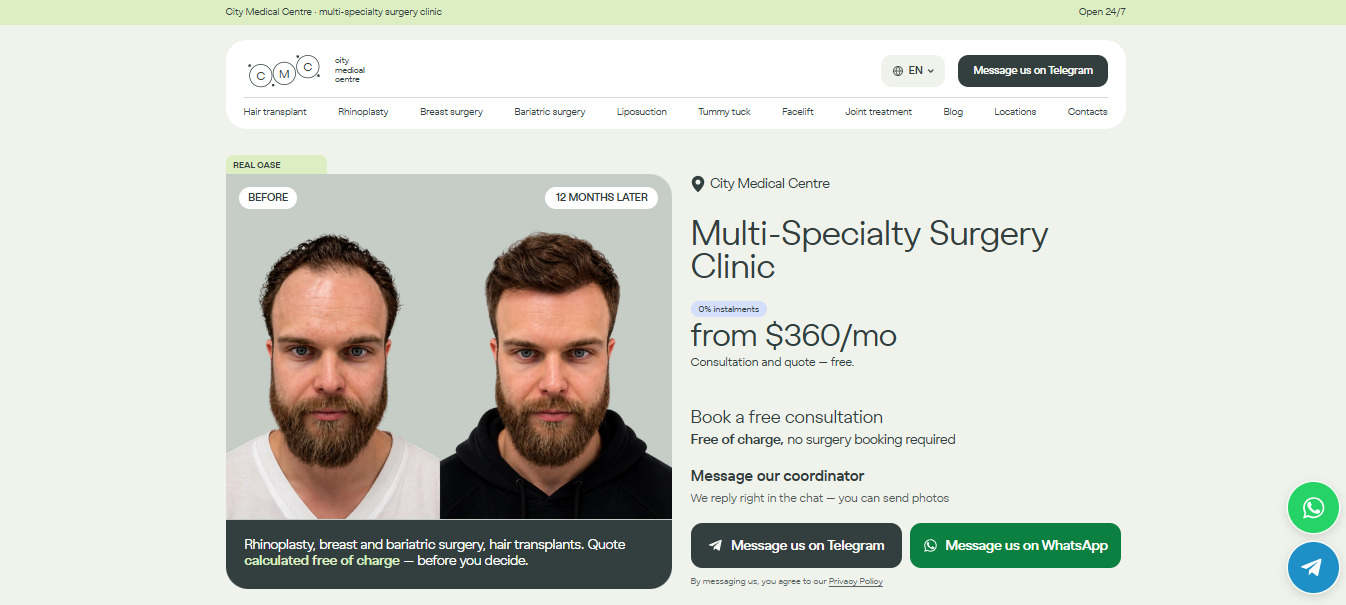
- No before-and-after photos taken at least 12 months after surgery
- Pressure to pay a deposit immediately
- Vague answers about who performs the procedure
How to compare offers
Send the same photos to each clinic and ask for the same information: graft estimate, method, who operates, full price and what aftercare looks like.
Clinics that publish their methods and prices openly, such as City Medical Centre, make this comparison much easier.
Thinking long term
Hair loss can continue after the transplant, so a good plan considers your future pattern, not only today.
Medical treatment is often recommended to protect existing hair. The cheapest option is rarely the best value if it needs correcting later.
Artikel terkait lainnya