

Cookware Polishing Machine for Southeast Asian Factories: Finish Stability Before Speed
 DEMOCRAZY News
11 Agustus 2026 6:16 pm
.
3 menit membaca
DEMOCRAZY News
11 Agustus 2026 6:16 pm
.
3 menit membaca
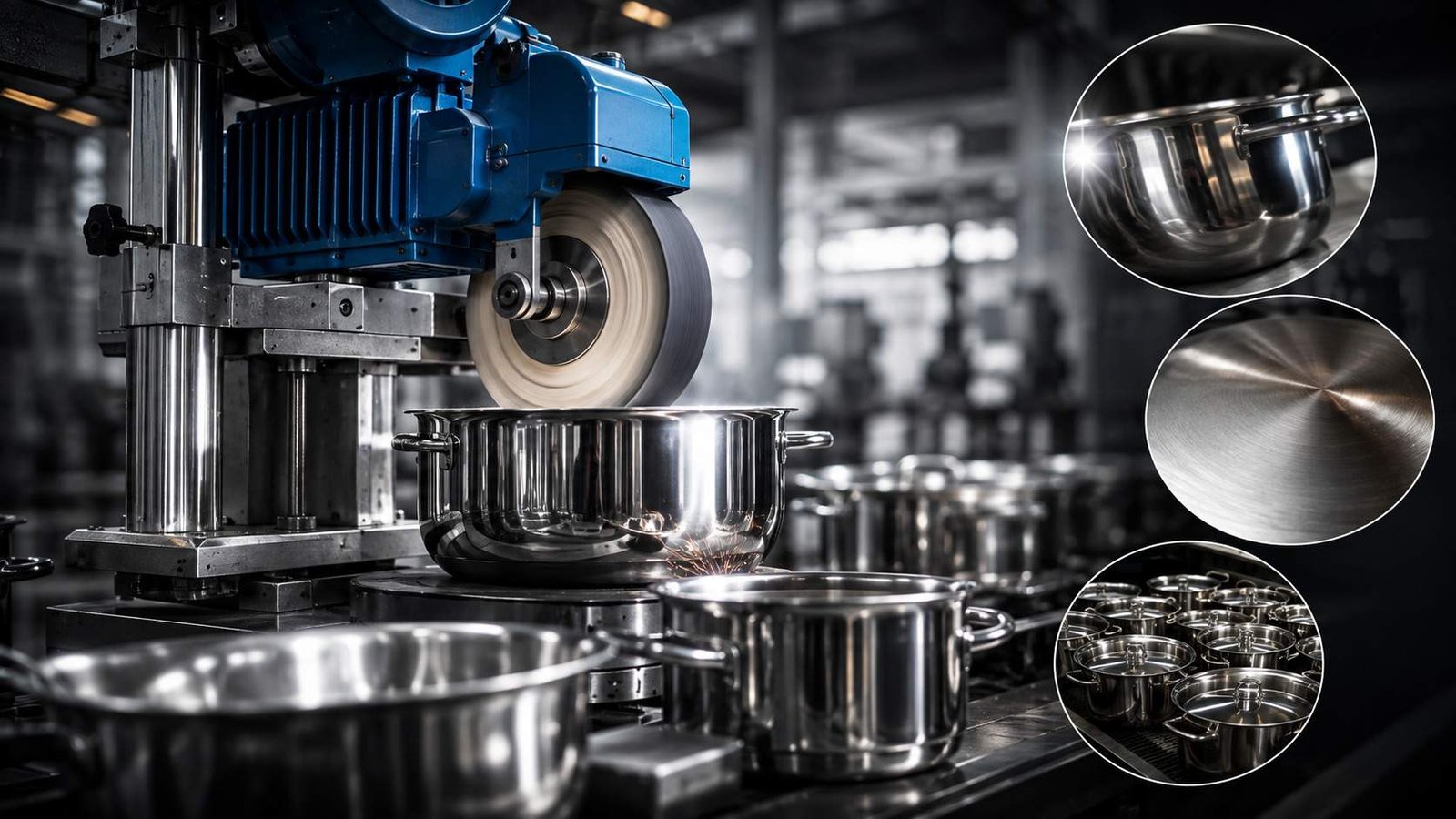
The shine on a stainless-steel pot looks simple in a showroom. On the factory floor, achieving that finish repeatedly can involve part shape, surface condition, polishing material, operator handling and machine setup.
For Southeast Asian cookware producers, a polishing-machine purchase should make consistency easier—not add another complicated process to manage.
Begin with the finish customers will see
Define whether the product needs a mirror-like appearance, a softer polished surface or preparation for another finishing step.
Share sample parts or clear photos of the accepted result. A visible reference is often more useful than a vague request for “high gloss.”
The material, diameter, depth and wall shape also matter. A machine that works well for a flat disc may not be the right solution for a deep cooker body or a product with several curves.
Show the supplier the current process
Explain how parts arrive at polishing, how they are positioned and what happens after the operation.
If the factory already uses manual polishing or an older machine, note the problems the new equipment should solve.
These might include uneven finish, repeated rework, slow loading or difficulty handling different sizes.
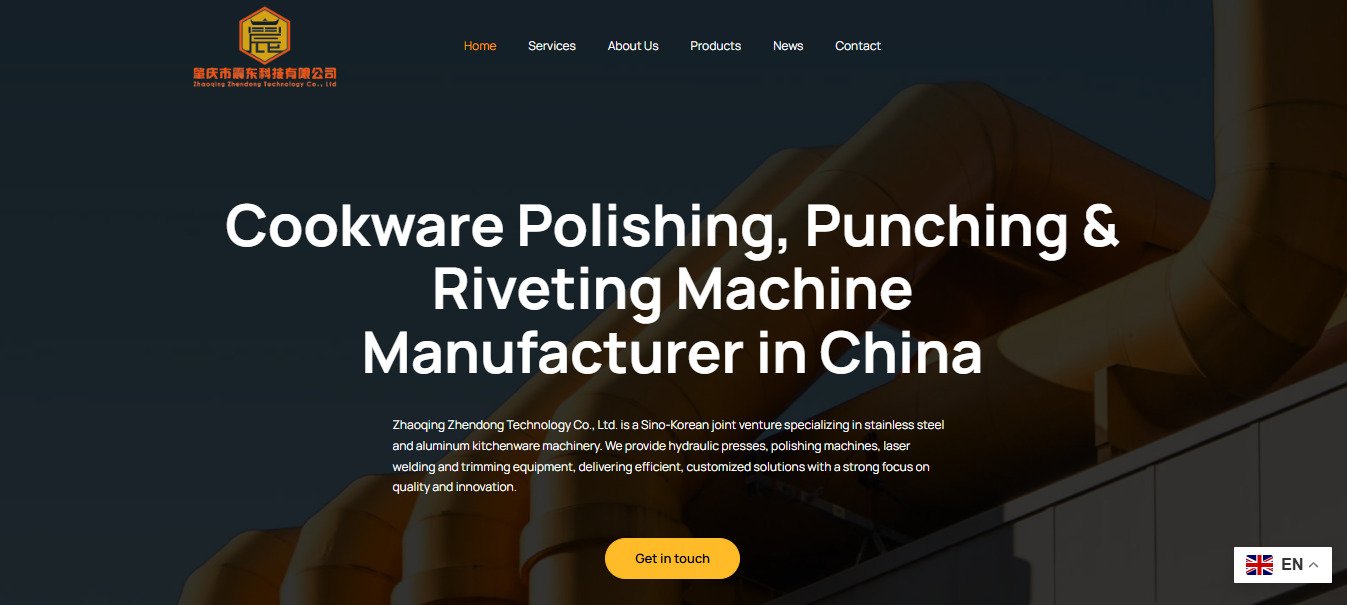
Zhaoqing Zhendong Technology lists polishing machines among its stainless-steel and aluminum kitchenware processing equipment.
The company also produces presses, edge-cutting machines, laser-welding machines, punching and riveting machines, trimming equipment and disc-cleaning systems.
Look at the wider production flow
A polishing machine performs best when the previous process delivers a consistent part and the next stage can accept the output.
Buyers can review the cookware processing equipment manufacturer and its cookware production equipment range to see how polishing may connect with other stages of a cookware line.
Zhendong states that specialised machinery can be designed for customer orders.
For a custom project, provide product drawings, samples and a clear explanation of the required finish and handling method.
Make acceptance easy to understand
Before ordering, agree on what will be checked during a trial. This may include the appearance of a representative part, the ability to handle the agreed size range and the steps required for changeover.
Keep the acceptance points practical enough for both the supplier and the factory team to recognise.
A polished surface attracts attention because it looks effortless.
The equipment behind it should aim for the same feeling: a clear process, repeatable results and less unnecessary rework. That is a more valuable goal than speed alone.
cookware cutting machinecookware polishing machinecookware punching machinecookware riveting machineedge cutting machine
Artikel terkait lainnya