




Bar Mitzvah at the Western Wall, Southern Wall or Masada: Choosing the Right Setting
 DEMOCRAZY News
24 November 2026 9:40 pm
.
12 menit membaca
Bar Mitzvah at the Western Wall, Southern Wall or Masada: Choosing the Right Setting
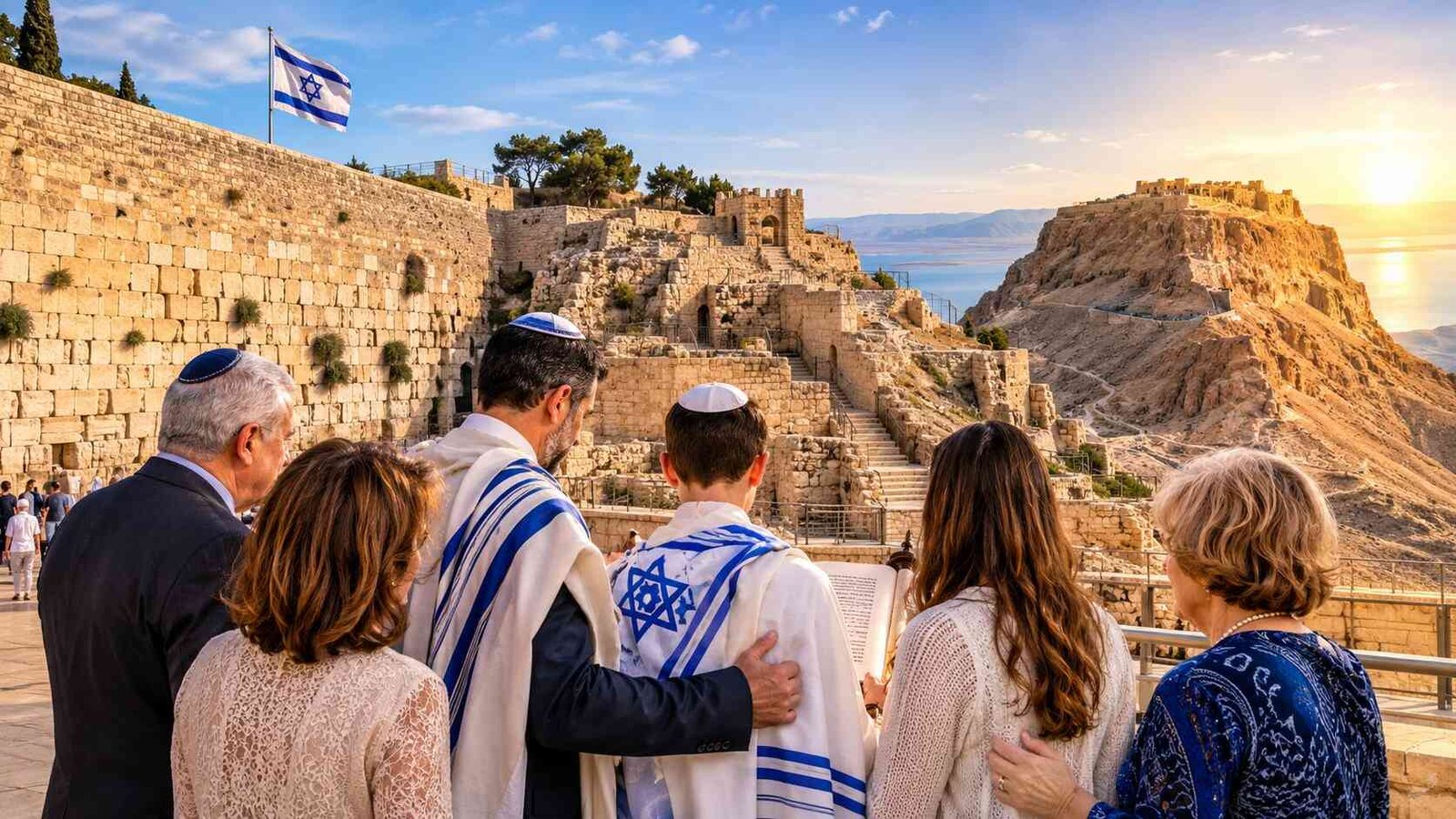
Planning a bar mitzvah ceremony in Israel forces families to confront a decision that feels both spiritual and logistical: which site will frame this milestone?
The Western Wall, the Southern Wall excavations, and Masada each offer distinct experiences, yet many families approach the choice with assumptions shaped by postcards rather than practicalities.
If you’re considering Israel bar mitzvah tours, understanding what each location actually demands—and delivers—can prevent costly mismatches between expectation and reality.
This comparison cuts through the symbolic weight each site carries to examine the factors that matter on the day: accessibility, crowd dynamics, ceremony logistics, and how the physical environment shapes the experience for participants and guests.
No location is universally superior; the right choice depends on your family’s priorities, group composition, and tolerance for complexity.
The Western Wall: Navigating Crowds and Protocol
The Western Wall plaza operates as both an active prayer site and a major tourist attraction, which creates friction for private ceremonies.
Families arrive imagining an intimate moment against ancient stones, then discover they’re sharing the space with tour groups, spontaneous celebrations, and regular worshippers—all within a strictly gender-separated environment.
Security screening at the entrance resembles airport protocol.
During peak pilgrimage seasons (Passover, Sukkot, summer months), the queue alone can consume thirty minutes.
Once inside, the men’s section—where the ceremony occurs—becomes densely packed by mid-morning.
Securing even a modest patch of stone wall for photographs requires early arrival and assertive positioning. The religious regulations here aren’t negotiable.
Women cannot participate directly in the ceremony and must observe from the separate section or the elevated plaza.
If your vision includes grandmothers standing beside the bar mitzvah boy during the Torah reading, this location eliminates that possibility.
The mechitza (partition) is permanent and enforced.
Sound and Space Constraints
Amplification is prohibited, which means acoustic projection matters.
A boy with limited Hebrew fluency or a soft voice will struggle to be heard beyond the immediate circle, particularly when adjacent groups conduct simultaneous ceremonies—a common occurrence.
The plaza’s acoustics don’t favor clarity; stone surfaces create echo, and ambient noise from hundreds of people fragments attention. Photography faces restrictions too.
While personal photos are permitted, professional setups with lighting or large equipment draw scrutiny from site authorities.
Flash photography during prayer times often prompts intervention.
The result: many families end up with documentation that feels more like candid snapshots than the polished commemoration they envisioned.
Southern Wall Excavations: Archaeological Context with Tradeoffs
The Davidson Center archaeological park adjacent to the Western Wall offers an alternative that appeals to families seeking historical depth without the plaza’s intensity.
Here, the Southern Wall’s exposed stones and reconstructed steps from the Second Temple period create a setting where the ceremony feels integrated into a tangible historical narrative.
This site permits mixed-gender participation, which immediately expands how families can structure the service.
Mothers, sisters, and grandmothers can stand together with male relatives during readings.
For families uncomfortable with strict separation, this shift alone makes the Southern Wall preferable.
The archaeological context, however, imposes different constraints:
- The area lacks climate control—summer heat reflects off pale limestone with minimal shade; winter rain has no coverage fallback.
- Elderly guests or those with mobility limitations face uneven ancient paving and steps without handrails.
- The site closes at designated hours; ceremonies must conclude before lockout, leaving no buffer for delays.
- Tourist foot traffic continues during ceremonies, as the park remains open to general visitors who may pause, photograph, or walk through your gathering.
Acoustically, the open-air ruins present challenges opposite to the Western Wall’s enclosed plaza.
Sound dissipates rather than echoes, requiring voices to project across stone expanses.
Groups larger than twenty people find it difficult to maintain cohesion without microphone support, which the site permits but requires advance arrangement.
The Ritual Equipment Question
Unlike the Western Wall, where Torah scrolls are permanently available, the Southern Wall requires bringing your own ritual items.
Families must arrange for a Torah scroll (often borrowed from a local synagogue or through a tour coordinator), ensure it arrives safely, and appoint someone responsible for its supervision throughout the ceremony.
This adds logistical threads that some families find empowering—full control over the service elements—while others experience it as unnecessary complication.
Masada: Drama and Distance
Conducting a bar mitzvah atop Masada introduces geographical and atmospheric factors absent from Jerusalem sites.
The plateau rises 400 meters above the Dead Sea, accessible via cable car or a strenuous hiking path that takes roughly an hour.
The views across the Judean Desert create a backdrop many families describe as transformative, but the location’s remoteness demands careful planning. Timing dictates feasibility.
Summer temperatures on the exposed plateau regularly exceed 40°C (104°F) by mid-morning, rendering outdoor ceremonies physically punishing.
Most Masada bar mitzvahs occur at sunrise to avoid heat, which means guests depart accommodations in darkness and arrive before the cable car’s standard operating hours—requiring special arrangement and additional cost.
Baca Juga
The elevation and open desert environment create wind conditions that vary unpredictably.
Prayer shawls billow, pages flip uncontrollably, and setting up even basic decorations becomes an exercise in anchoring everything against gusts.
Sound carries differently here; voices project across the plateau but can be whipped away depending on wind direction.
Logistics and Guest Experience
Masada’s distance from Jerusalem (roughly 90 minutes by vehicle) requires either coordinating group transportation for all guests or accepting that some invitees will decline due to travel burden.
Baca Juga
Elderly relatives or young children face a particularly demanding schedule if the ceremony starts at dawn.
Consider these practical realities:
- Cable car capacity limits how quickly a group can ascend; staggered arrivals spread your gathering over twenty or more minutes.
- The plateau offers no synagogue structure—ceremonies occur in open areas amid archaeological ruins, requiring portable Torah, tables, and seating.
- Bathroom facilities are basic and located at the cable car station, not near ceremony areas.
- Cellular reception is inconsistent, complicating last-minute coordination.
- Post-ceremony meals cannot occur on-site; groups must descend and travel to restaurants, fragmenting the celebration timeline.
Yet for families prioritizing dramatic setting and symbolic resonance—Masada’s history of Jewish resistance carries powerful narrative weight—these challenges become acceptable costs.
The sense of isolation and the stark beauty of desert and ruin create an atmosphere impossible to replicate in urban Jerusalem.
Comparing Accessibility and Inclusivity
When evaluating these three locations, accessibility extends beyond wheelchair ramps to encompass how the site accommodates diverse family configurations and participation styles.
The Western Wall’s gender separation may align perfectly with Orthodox families while alienating those from Conservative or Reform backgrounds.
The Southern Wall’s archaeological focus suits families who value educational context but frustrates those expecting a more devotional atmosphere.
Masada’s physical demands exclude guests with health limitations but reward those who seek experiential intensity.
| Factor | Western Wall | Southern Wall | Masada |
|---|---|---|---|
| Gender integration | Prohibited | Permitted | Permitted |
| Climate control | Outdoor, partial shade | Outdoor, minimal shade | Outdoor, exposed |
| Crowd interference | High | Moderate | Low (early morning) |
| Mobility requirements | Moderate (security, plaza) | Challenging (uneven terrain) | Strenuous (elevation, heat) |
| Ritual equipment | On-site Torah available | Must arrange separately | Must arrange separately |
| Travel from Jerusalem | Central location | Adjacent to Western Wall | 90-minute drive |
None of these variables should be dismissed as minor details.
A ceremony that requires an 85-year-old grandmother to navigate steep archaeological steps or a teenage boy to project Hebrew prayers into desert wind without amplification isn’t just inconvenient—it fundamentally alters who can participate comfortably and what the day feels like.
Photography and Documentation Realities
How you plan to document the ceremony should influence location choice more than many families anticipate.
The Western Wall’s restrictions on professional photography equipment mean you may end up with images that don’t match the professional quality you’d assumed.
The Southern Wall permits more flexibility but offers less iconic visual recognition—guests unfamiliar with Israeli archaeology may not immediately identify the setting’s significance in photos.
Masada delivers the most photographically dramatic backdrop, but harsh morning light and desert exposure create technical challenges.
The plateau’s openness means no natural shade to soften facial shadows, and the distance between photographer and subjects across ruins can limit framing options.
If you’re hiring a professional photographer, their familiarity with each site’s specific lighting conditions and restriction landscape becomes critical.
Cultural and Religious Fit
Your family’s denominational background and observance level should honestly guide this decision, even when other factors seem more pressing.
Orthodox families will find the Western Wall’s protocol familiar and meaningful, while the same regulations may feel alienating to families from more egalitarian traditions.
The Southern Wall and Masada offer religious flexibility but lack the formal prayer infrastructure that observant families expect. Consider too how your guests will perceive the choice.
A ceremony at Masada signals a family willing to prioritize experiential uniqueness over convenience—guests interpret that message, consciously or not.
The Western Wall communicates traditionalism and connection to mainstream Jewish practice.
The Southern Wall positions the bar mitzvah as an educational journey, anchoring the milestone in historical continuity.
These aren’t superficial branding exercises; they reflect what your family values and how you want your son to remember his transition to adulthood.
Making the Decision: Questions to Ask
Rather than tallying pros and cons abstractly, work through these concrete questions with your family:
- Is gender-separated prayer acceptable, or does your vision require mothers and sisters standing beside the bar mitzvah boy?
- Do any key guests have mobility, heat tolerance, or health limitations that make specific locations impractical?
- How important is controlling the ceremony’s acoustic and visual environment versus accepting shared space with other visitors?
- Are you prepared to manage additional logistics (Torah transport, early departure times, group coordination across distances) for the sake of a particular setting?
- Does your son have preferences or anxieties about performing in crowded versus remote environments?
- What documentation matters most: iconic imagery, intimate family moments, or comprehensive video coverage?
The answers to these questions reveal which location’s tradeoffs you can accept and which represent dealbreakers.
No amount of symbolic resonance compensates for a ceremony where half your guests are uncomfortable or your son struggles to be heard.
Coordination and Expertise
Whichever location you select, navigating permissions, timing, equipment, and site-specific protocols requires either significant personal research or guidance from someone with on-the-ground knowledge.
Families attempting DIY coordination often underestimate the administrative friction: securing ceremony permits, arranging rabbi or service leader availability, timing site access to avoid conflicts with other events, understanding seasonal crowd patterns.
Working with a licensed guide who regularly coordinates bar mitzvah ceremonies at these locations eliminates much of this uncertainty.
They’ve encountered the specific scenarios that derail unprepared families—security delays during holiday periods, acoustic dead zones at the Southern Wall, cable car mechanical closures at Masada—and can structure timelines and backup plans accordingly. The value isn’t just logistical.
A guide familiar with your chosen location can shape how the ceremony integrates the site’s history and atmosphere into the service itself, transforming the setting from backdrop to participant in the milestone.
That integration—when done well—is what families remember years later, not whether the schedule ran precisely on time.
Beyond the Ceremony Itself
The bar mitzvah ceremony occupies perhaps two hours of your Israel trip.
How the location fits into your broader itinerary matters for practical reasons: exhaustion, travel time between sites, and whether the ceremony’s location creates natural connections to other experiences your family wants.
A Western Wall ceremony slots easily into Jerusalem-focused touring—the Jewish Quarter, City of David, Mahane Yehuda market all lie within walking distance or short drives.
The Southern Wall similarly anchors you in the Old City area.
Masada, however, positions you in the Dead Sea region, which suggests structuring your itinerary to include desert exploration, Ein Gedi nature reserve, or Qumran caves rather than doubling back to Jerusalem immediately.
Some families prefer clustering the ceremony with related Jerusalem sites, treating it as the spiritual centerpiece of focused urban touring.
Others appreciate Masada’s geographical separation, using the desert ceremony to mark a transition point in a longer journey that moves between regions and themes.
Neither approach is superior; they reflect different philosophies about how a bar mitzvah trip should flow.
Final Considerations
Choosing between the Western Wall, Southern Wall, and Masada isn’t about identifying the objectively best location—it’s about matching a site’s concrete characteristics to your family’s specific needs, limitations, and values.
The Western Wall offers prayer infrastructure and iconic recognition at the cost of crowds and strict gender separation.
The Southern Wall balances historical context with ceremonial flexibility but demands more logistical self-sufficiency.
Masada delivers dramatic isolation and powerful symbolism while imposing physical demands and coordination complexity.
What remains constant across all three: the ceremony’s meaning derives not from the setting’s inherent grandeur but from how thoughtfully you’ve matched location to participants.
A well-planned Western Wall ceremony surrounded by family can outweigh a poorly coordinated Masada sunrise where guests arrive exhausted and scattered.
The site amplifies your planning—or exposes its gaps.
Invest time in honest assessment of your group’s composition, your son’s readiness for each environment, and which logistical tradeoffs you can manage versus which will generate stress that undermines the day itself.
That clarity, more than any location’s symbolic weight, determines whether the bar mitzvah becomes a milestone your family recalls with satisfaction or a beautiful setting that couldn’t quite overcome practical mismatches.
bar mitzvah ideasbar mitzvah israelbar mitzvah logisticsbar mitzvah planningceremonial traditionscultural heritage traveldavidson centerdead sea travelfamily travel israelisrael bar mitzvah toursisrael family tripjerusalem bar mitzvahjewish milestonejudean desertmasada bar mitzvahold city jerusalemsouthern wall bar mitzvahtorah reading israeltravel planning tipswestern wall bar mitzvah
Artikel terkait lainnya