

Carbide End Mills Manufacturer for Aluminum: Why Tool Geometry Matters
 DEMOCRAZY News
11 Agustus 2026 6:25 pm
.
3 menit membaca
DEMOCRAZY News
11 Agustus 2026 6:25 pm
.
3 menit membaca
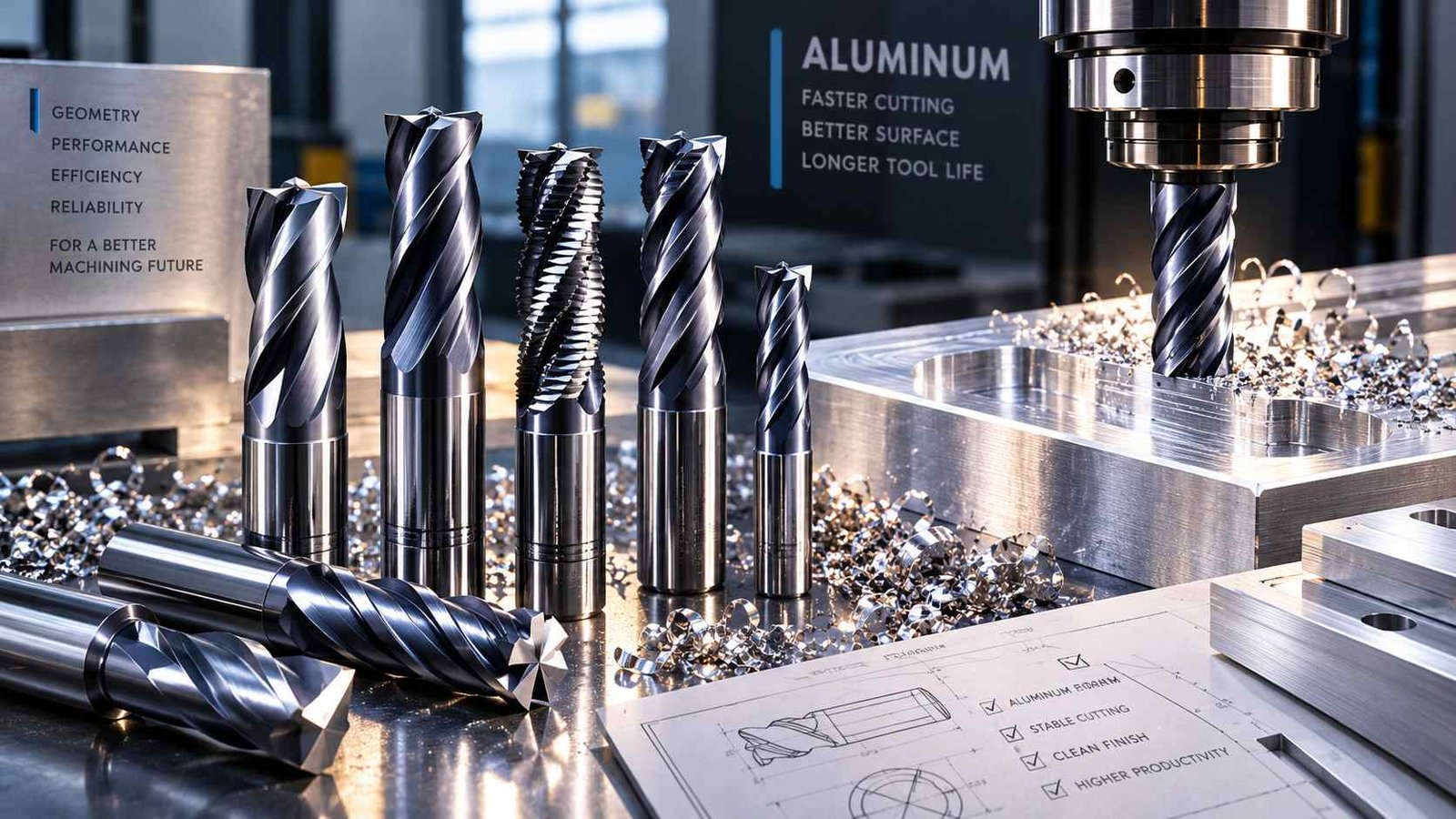
Aluminum is often described as easy to machine, but anyone who has dealt with sticky chips, built-up edge or a poor surface finish knows the reality can be different.
The right carbide end mill can make the process feel smooth; the wrong geometry can turn an ordinary job into repeated tool changes and rework.
Why aluminum needs its own tool strategy
Aluminum is soft and ductile, so chips can stick to the cutting edge if there is not enough space for evacuation. Heat and recutting can then affect the finish.
This is why tools designed for aluminum often use fewer flutes, larger chip spaces and geometry intended to keep material moving away from the cut.
The exact choice still depends on the alloy, operation and machine. Roughing a pocket and finishing a visible surface do not ask the same thing from the cutter.
Start with a few practical questions
What aluminum alloy is being machined? Is the operation slotting, side milling, pocketing or finishing? What diameter and reach are required?
Is chip evacuation already a problem? These questions help narrow the options more quickly than asking only for a “high-quality end mill.”
Yumiteck describes carbide end mills and PCD tooling for aluminum among its product capabilities.
Its website also discusses dedicated aluminum cutters with two or three flutes, larger gullets and geometry intended to support smoother chip removal.
Tool projection and workholding are worth mentioning as well. A long, lightly supported setup may need a different approach from a rigid production fixture, even when the material and cutter diameter are the same.
Use the supplier’s range as a starting point
The Yumiteck carbide cutting tools website introduces the company’s wider turning and milling capabilities.
Buyers can then review the milling cutter range and share their part and process information for a more focused recommendation.
For custom requirements, the company states that it supports OEM, ODM and OBM cooperation.
That can be useful when a standard product does not fit the reach, profile or production goal.
Judge performance on the machine
A promising specification still needs a controlled trial. Run the tool on a representative part and record surface finish, chip behaviour, wear and production time.
If a result changes, note whether speed, feed, coolant or tool projection changed as well.
The most attractive cutter is not always the one with the most technical claims. It is the one that produces a clean, repeatable result in the customer’s real setup. A clear enquiry and a simple trial make that result much easier to find.
carbide end mills manufacturercnc milling cutters manufacturerend mills manufacturermilling cutters manufacturer china
Artikel terkait lainnya