




Real-time vs Batch AI in Healthcare: Key Differences, Trade-Offs, and Use Cases
 DEMOCRAZY News
22 Mei 2026 7:24 pm
.
9 menit membaca
DEMOCRAZY News
22 Mei 2026 7:24 pm
.
9 menit membaca
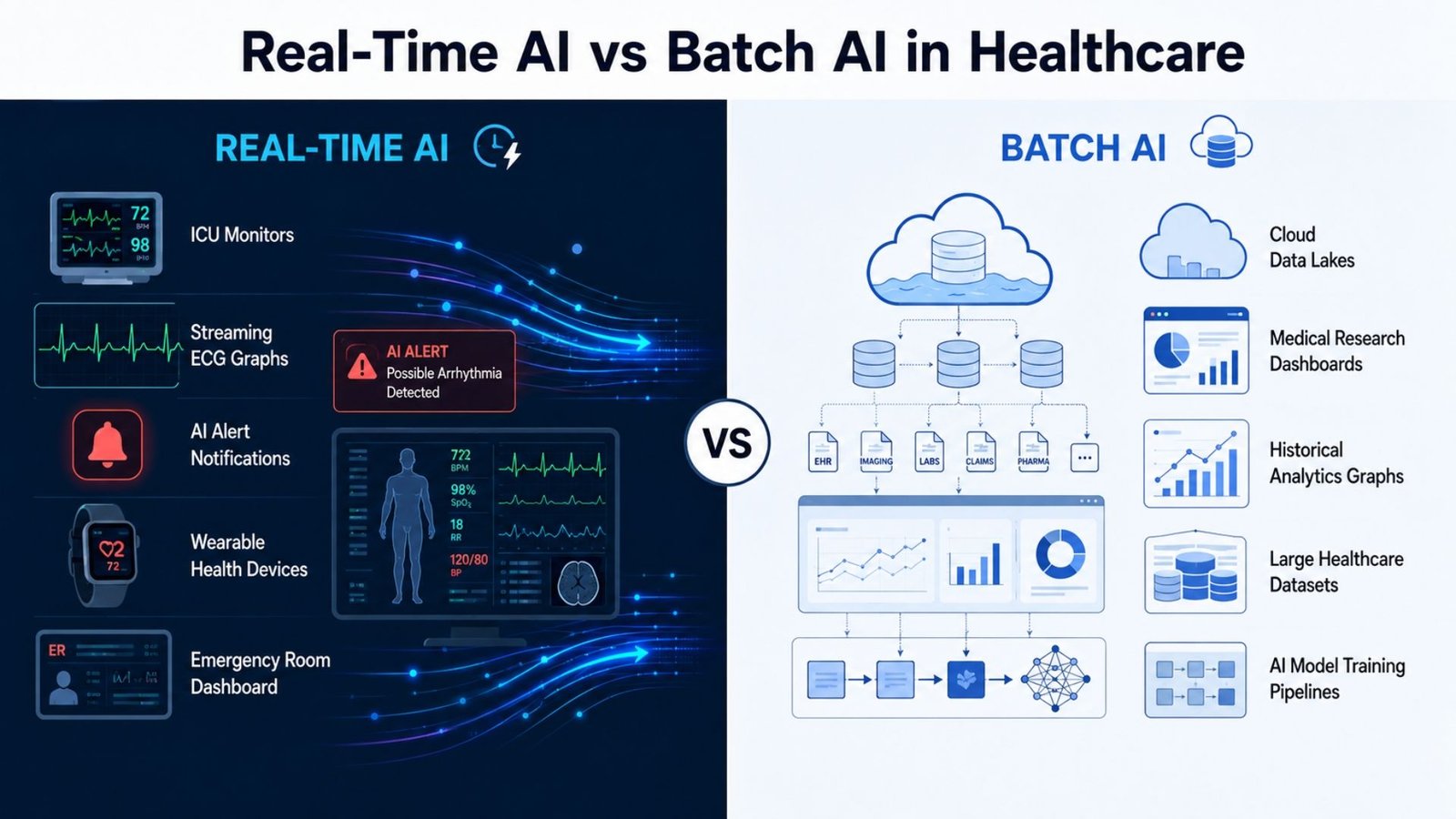
Summary: This blog explores the key differences between real-time AI and batch AI in healthcare, helping CTOs and healthcare technology leaders understand which architecture best fits specific clinical and operational workflows. It explains how real-time AI enables instant decision-making for critical environments like ICUs, emergency departments, wearable monitoring, and surgical systems, while batch AI is better suited for large-scale analytics, medical research, population health management, claims processing, and imaging optimization. The blog also highlights major trade-offs involving latency, infrastructure complexity, scalability, cost, and accuracy. Ultimately, it emphasizes that successful healthcare AI systems should align with clinical urgency, compliance requirements, infrastructure maturity, and long-term scalability goals.
AI is quickly becoming a foundational technology in contemporary health care systems. Its applications range from clinical decision support and workflow automation to a wide range of data-driven use cases; the choice between real-time systems and batch processes remains one of the key questions healthcare CTOs must answer today.
There are many reasons behind this choice and the way it impacts the infrastructure architecture. They include such things as:
- Infrastructure design
- Latency needs
- Cost of cloud resources
- Data pipelines
- Compliance control
- Clinical reliability
- Scalability
Many healthcare teams do not make informed choices regarding the need for real-time analytics and AI versus batch processing in healthcare. This leads to unnecessary complications, extra expenses, and poorly performing solutions at best.
AI adoption in healthcare continues to accelerate as organizations focus on operational efficiency and patient outcomes.
From a purely technical point of view, these architectures solve completely different tasks. Real-time AI is all about fast inference and quick decision-making, whereas batch systems are better suited for analysis, optimization, and other similar purposes.
In brief, my recommendation for healthcare CTOs would be as follows:
- Use real-time AI where seconds count.
- Use batch AI when scalability and efficiency come first.
What is Real-time AI in Healthcare?
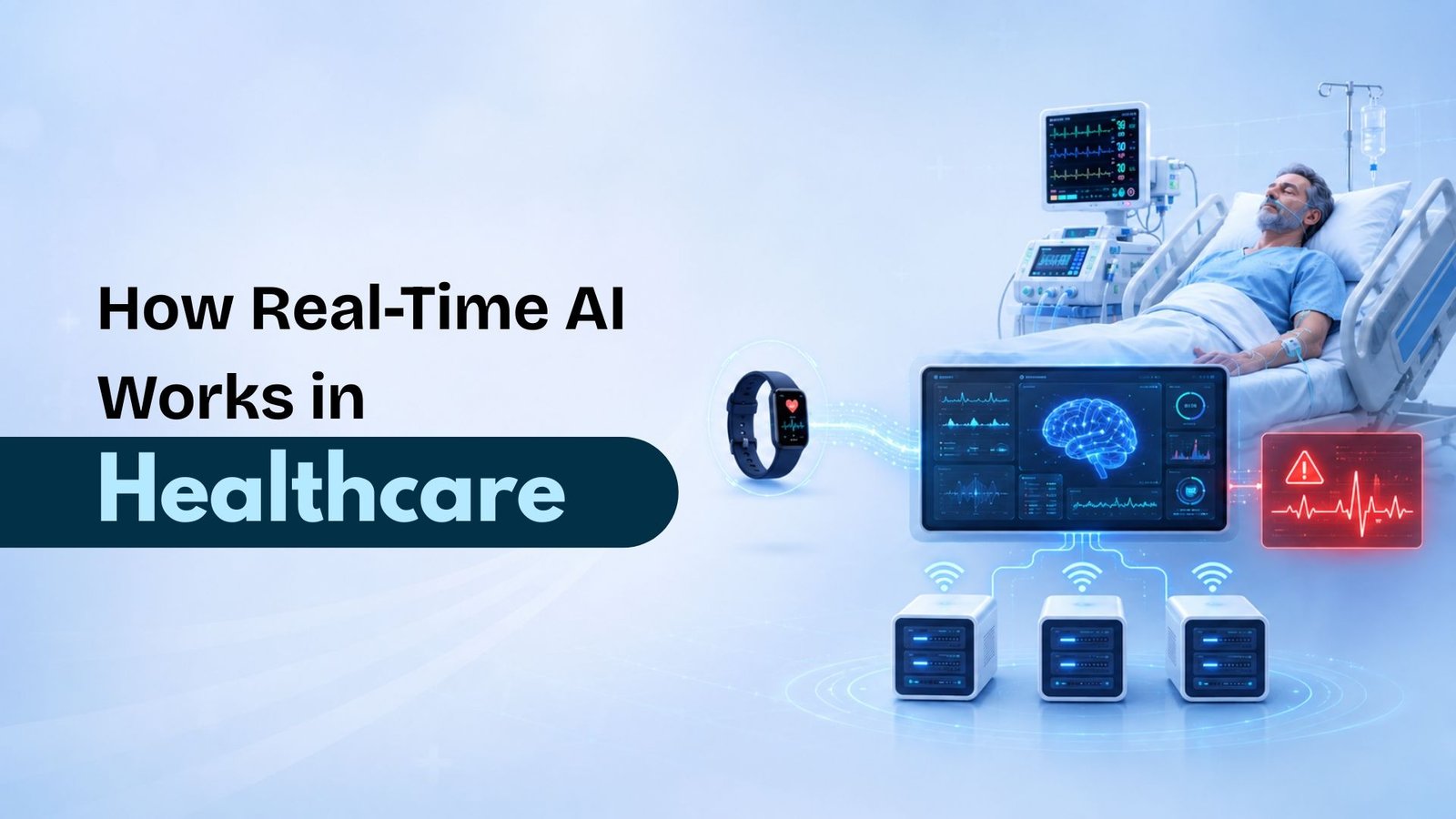
Real-time AI involves processing healthcare data as soon as it arrives in seconds or milliseconds, along with the production of instant output.
These systems continually assess real-time data streams from sources such as:
- Intensive Care Unit (ICU) monitors
- Wearable health trackers
- Medical imaging systems
- Emergency room displays
- Operative instruments
- Remote patient monitoring systems
The main purpose is to take instant clinical actions.
As opposed to conventional AI processes, real-time systems work in accordance with rigid latency requirements. Predictive delays can cause direct consequences on patient well-being, precision of treatment, or operational efficacy.
In terms of technology, real-time healthcare AI needs:
Baca Juga
- Data stream processing capabilities
- Efficient inference engines
- Edge computing facilities
- Highly available architecture
- Monitoring systems
- Event-based architecture
Use Cases of Real-time AI in Healthcare
Some examples of these include:
- Heart attack detection
- ICU alertness
- Real-time patient tracking
- Assisted robot surgery using AI
- Triage prioritization in emergencies
- Monitoring intelligent infusion pumps
- Health analytics using wearables
Most companies that develop their own custom healthcare development have realized the need for real-time intelligence due to increased dependence on patient engagement and monitoring.
What is Batch AI in Healthcare?
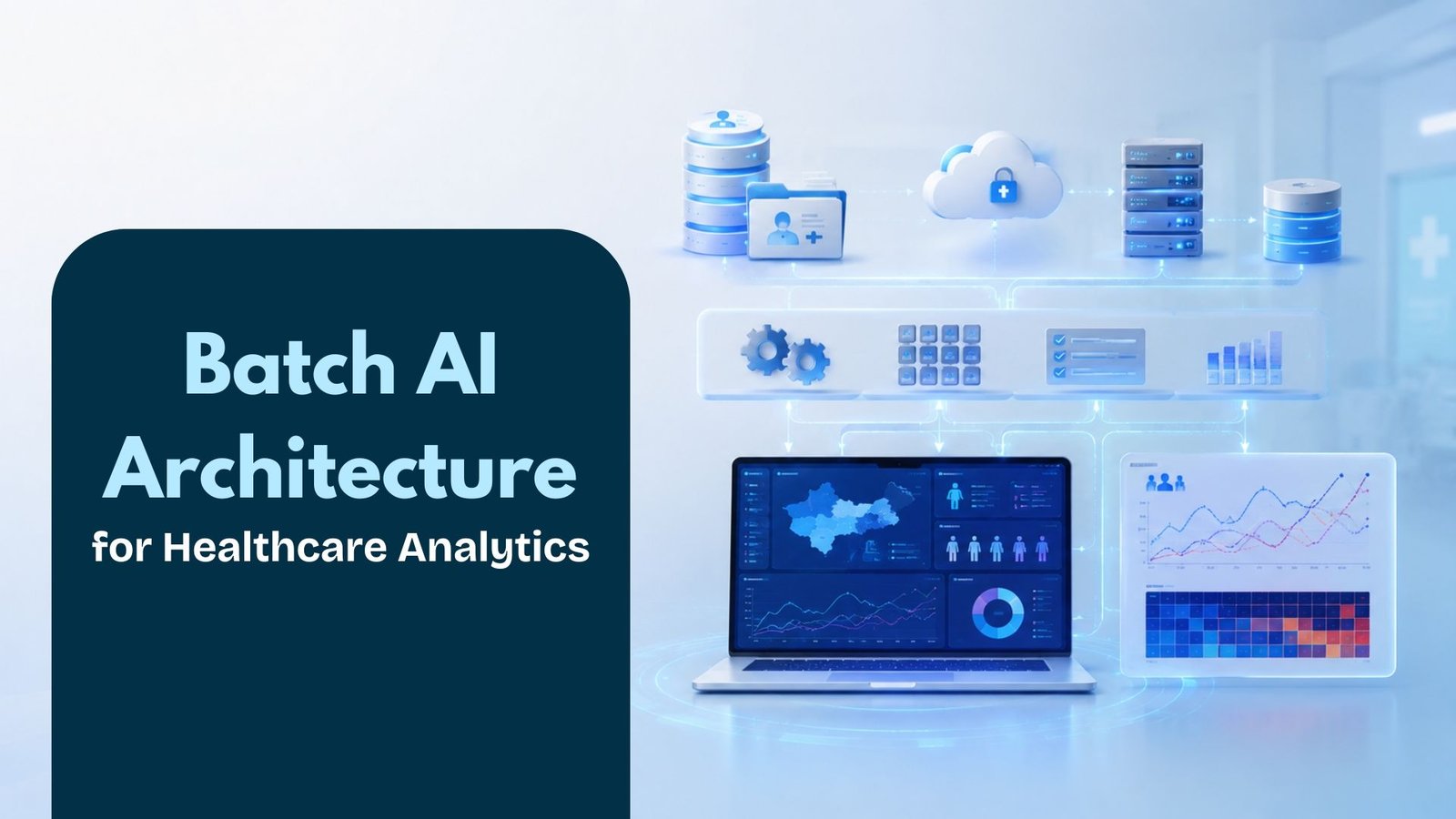
Batch AI performs periodic analysis on large datasets rather than continuous analysis.
Instead of processing live data streams of patients, batch AI involves collecting data and then processing it periodically at specified time intervals.
Baca Juga
These time intervals can include:
- Hours
- Days
- Weeks
- Months
Batch AI is particularly useful for:
- Trend analysis
- Big predictions
- Historical analysis
- Optimization
Insights about health care in populations.
Batch AI is particularly suited for applications where instant results are not necessary.
With respect to infrastructure, batch AI relies heavily on:
- Data lakes
- Storage scalability
- Distributed computing
- Off-line learning
- Big data analytics
Use Cases of Batch AI in Healthcare
Batch AI applications may include:
- Population health predictions
- Insurance claim fraud analysis
- Analysis of medical imagery
- Forecasting the demand for healthcare services
- Stratifying patient risks
- Analyzing clinical trials
- Drug discoveries
Increasingly, many companies in the healthcare sector, partnering with a Healthcare App development in the UK, use batch AI for scale and analytical purposes.
Comparison between Real-time vs Batch AI
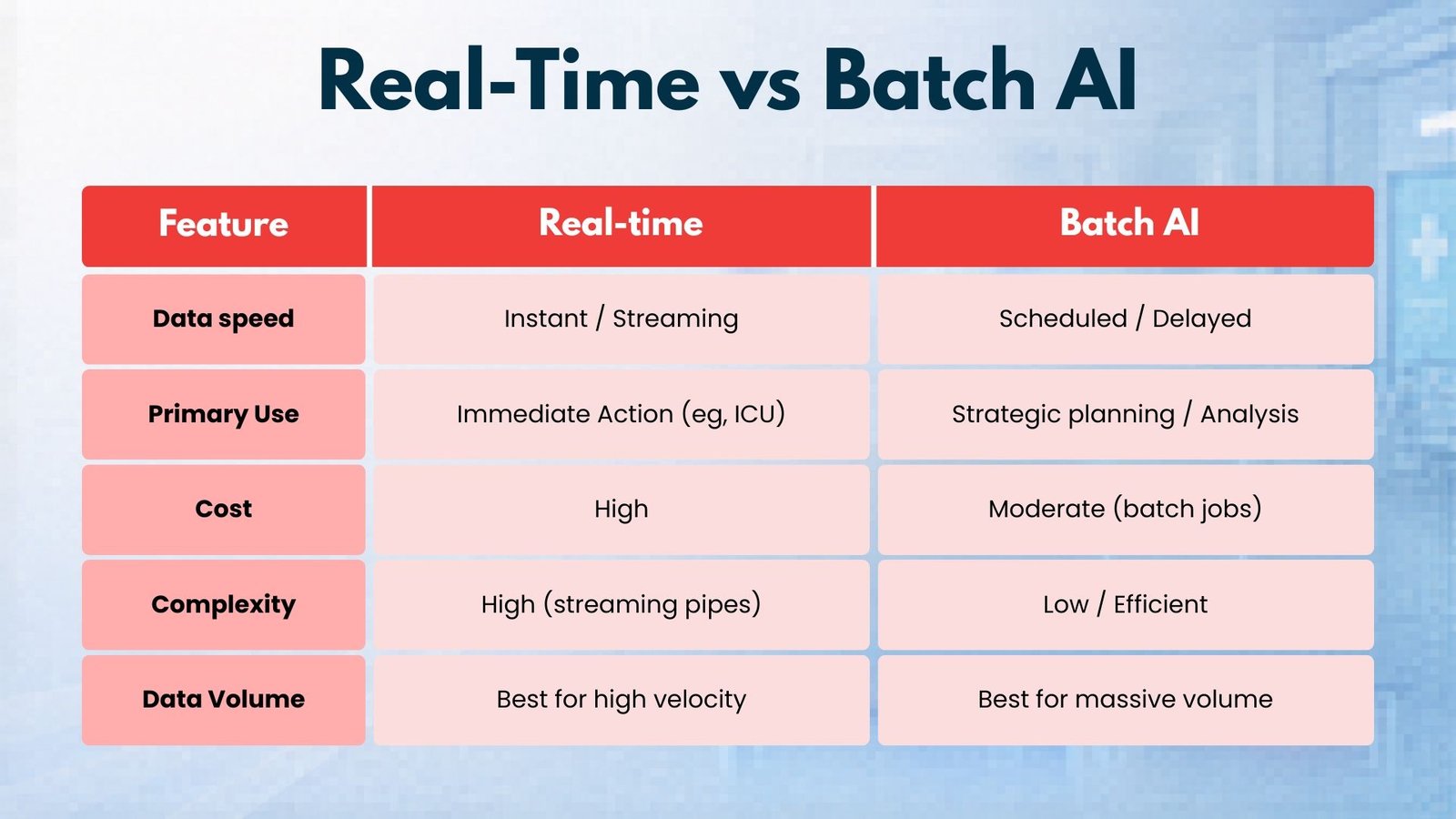
Key Differences and Trade-Offs
Latency (Speed)
Latency is one of the biggest differences. Real-time AI focuses on acting in the moment.
Use cases include:
- Detecting arrhythmia
- Monitoring ventilators
- Emergency response systems
Batch AI delays action to scale and optimize processes. In healthcare CTOs’ decisions, the deciding factor is:
- Is there an immediate need for action within the clinical process?
- If yes, real-time AI is probably needed.
Data Usage
Real-time systems depend on streamed data. Example cases:
- IoT sensors
- Wearables
- ICU telemetry
- Continuous monitoring systems
Batch AI uses mainly:
- Historical EHR data
- Claims history
- Medical imaging databases
- Population-level data
From an engineering perspective, streamed data processing systems are far more complex to manage than scheduled batch systems.
Cost and Resources
Real-time AI involves:
- Continuous compute access
- Infrastructure performance
- Network latency
- Observability continuity
It leads to:
- Cloud spending
- GPU utilization
- Operational complexity
Batch AI tends to be more efficient since the workloads can operate within optimal compute windows.
Businesses offering Healthcare mobile app development services tend to initiate operations with batch AI as it decreases infrastructure complexity during initial scaling of the product.
Accuracy and Complexity
Real-time AI favors quick response over thorough investigation.
Batch AI allows for:
- Optimization of modeling
- More profound analysis
- More thorough validation
Batch AI is limited by its lack of speed, however. One more point to consider is that of explainability.
Many medical facilities still depend on partially deterministic/static AI systems in regulatory environments due to their more predictable behavior and easier auditing.
Moreover, the creation of a prompt and a model of AI becomes even more crucial for AI operations in healthcare.
Real-time AI Use Cases
Intensive Care Unit (ICU)
There is an enormous amount of patient telemetry produced by ICUs. Artificial intelligence technologies are capable of monitoring:
- Oxygenation levels
- Blood pressure
- Heart rates
- Ventilation status
and other parameters in real-time.
Real-time AI systems can improve patient monitoring and early detection in critical care environments.
Wearable Device Analysis
Continuous data streams from wearables are obtained. AI algorithms process:
- Heart rate variability
- Sleep behavior
- Glucose levels
- Physical activity
Such technologies contribute to the management of preventive chronic diseases and telemedicine. A variety of technologies using mobile app development with React utilize wearable AI analytics.
These wearable devices play a significant role in enabling continuous health monitoring by integrating real-time AI-driven analytics.
Operating Room Decision Support
AI-enabled surgical systems offer:
- Guidance during procedures
- Identification of risks
- Monitoring of instruments
- Anomaly detection in real time
The need for latency arises since real-time feedback is essential in surgery.
Emergency Department Triage
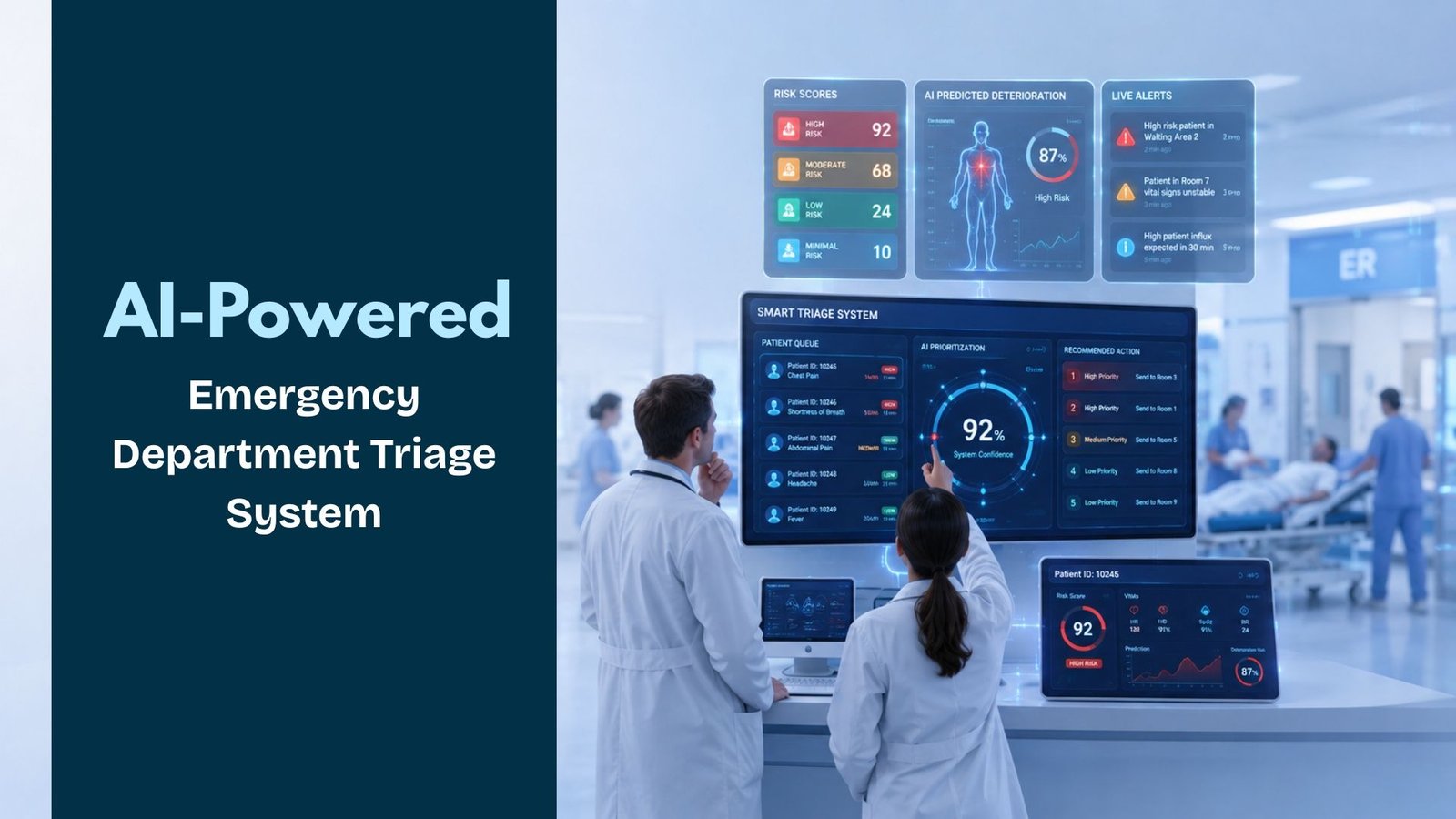
EDs function under stressful situations. Real-time AI can:
- Prioritize patients
- Predict risks of deterioration
- Optimize resource utilization
- Decrease wait times
From a workflow standpoint, this makes ED operations more efficient.
Batch AI Use Cases
Predictive Population Health
Benefits of Batch AI to healthcare institutions include:
- Populations at risk
- Trends of chronic illnesses
- Probability of re-admissions
- Opportunities for prevention
Administrative Claims Processing
Claim analysis utilizes large data sets that do not need to be processed immediately. Batch AI enhances:
- Fraud detection
- Billing process
- Claim validation
- Revenue cycle management
Medical Research and Development
Why is batch processing important in healthcare research?
- Large data sets are necessary for model training
- Years-long longitudinal studies
- Historical data-intensive clinical trial analysis
Organizations collaborating with a Healthcare App Development Company in the USA are making extensive use of batch AI in medical research.
Imaging Review and Scheduling
Typical radiology systems perform batch processing on imaging examinations for the following reasons:
- Scheduling priorities
- Anomaly detection
- Efficiency in scheduling
- Optimizing the productivity of radiologists
Batch AI enables reducing operational bottlenecks without requiring low latency. Medical imaging remains one of the most scalable use cases for batch AI systems.
Final Thoughts
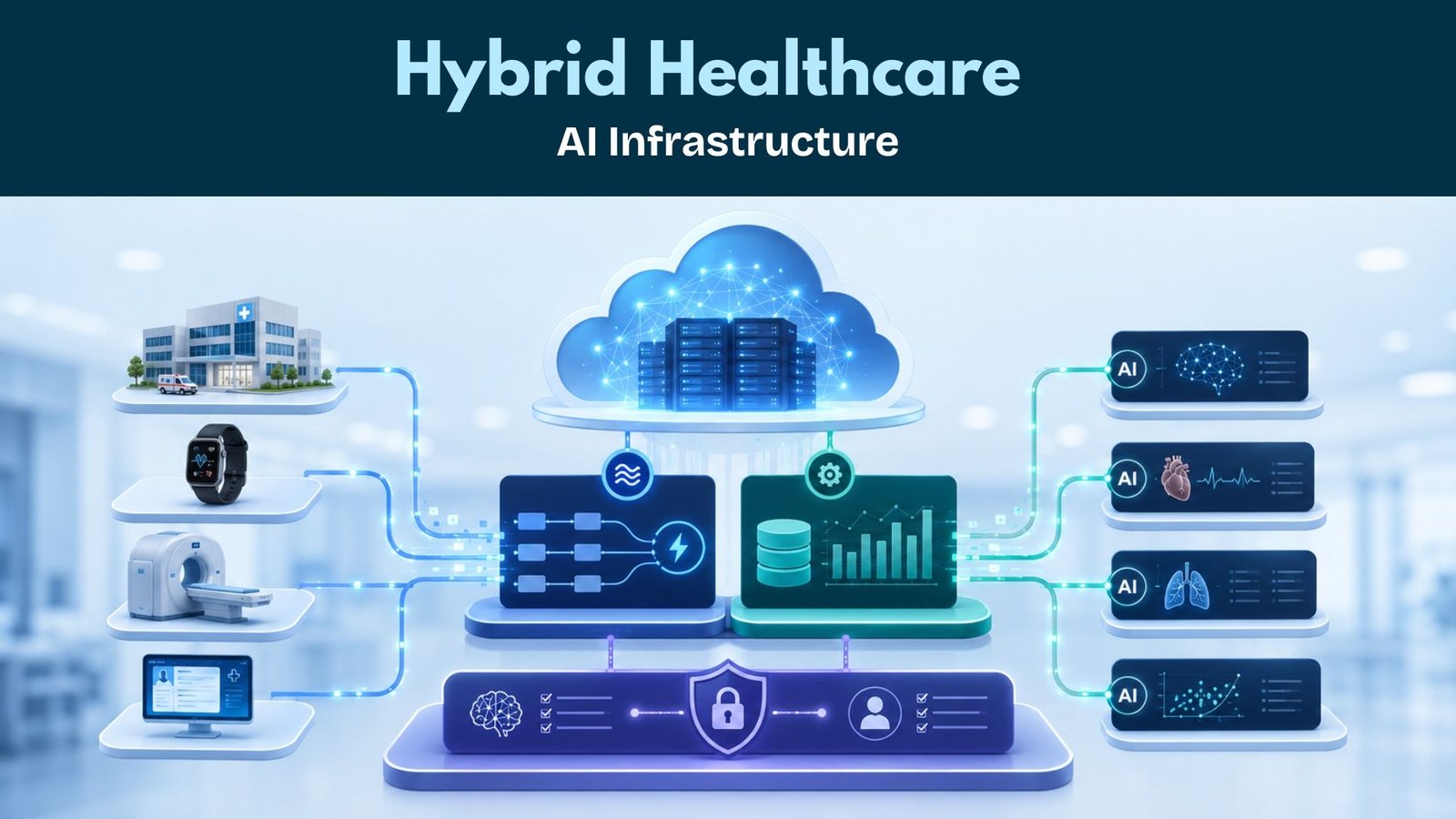
Contrary to popular belief, there is no discussion of whether one type of AI system is better than the other. This discussion is more about which architecture fits best for each type of healthcare workflow.
While real-time AI works wonders when clinical response is necessary, batch AI outperforms where massive analytics, low cost, and smart planning become important. In my experience, as a CTO, the biggest pitfall is using the wrong AI system for clinical processes where instant inference is not necessary.
However, this is not to say that only using batch AI in critical care environments can also pose risks. Simplifying it, my approach would look something like this:
- Select real-time AI where there is an issue of latency influencing the outcome.
- Pick batch AI when scalability is important or when you are trying to do historical analysis.
- Employ both technologies when designing healthcare intelligence platforms.
Healthcare AI architecture must always be in line with:
- Urgency of clinical operations
- Readiness of the existing infrastructure
- Regulatory compliance
- Scalability over time
When deciding whether to use batch AI or real-time AI for your healthcare platform, you might consider doing an evaluation first. Book a consultation with AI teams like Tech Exactly and learn how you can build AI-powered systems optimized for healthcare needs.
FAQs
When should I choose Real-time AI over Batch AI?
Among all, using real-time AI is suitable if a five-minute delay creates a safety risk or significantly reduces values. Furthermore, real-time AI is also important for emergency diagnostics and acute patient monitoring.
Can Real-time AI and Batch AI in Healthcare be used together?
Hybrid approaches in healthcare are not a new thing. So, yes, they can be used together. Real-time AI can benefit in flagging critical CT scans, and batch AI helps in processing comprehensive analysis of the studies throughout the day.
Which approach is more cost-effective? – Real-time AI or Batch AI
Among Real-time AI and Batch AI, Batch processing can be suitable, as it is more cost-effective. Further, companies can save up to 40% to 60% infrastructure costs.
Does real-time AI mean it is more accurate?
This is not necessary, whereas Batch AI can be seen as allowing deeper, more comprehensive analysis of large data systems. It can also play a significant role in providing highly accurate diagnostic findings.
ai in healthcarebatch ai healthcareclinical workflow automationcloud compute healthcaredigital health techhealth data analyticshealthcare compliance datahealthcare cost optimizationhealthcare ctohealthcare infrastructurehealthcare mobile apphealthcare technologyicu patient trackingmedical data architecturemedical research aipatient monitoring systemspopulation health managementpredictive healthcare analyticsreal time ai healthcaretech exactly
Artikel terkait lainnya