

How Property Management Companies Should Vet Emergency Maintenance Vendors
 DEMOCRAZY News
30 Juni 2026 3:24 am
.
5 menit membaca
DEMOCRAZY News
30 Juni 2026 3:24 am
.
5 menit membaca

Every property management company eventually faces the 2 a.m. phone call: a tenant reports a flooded apartment, the on-call vendor isn’t answering, and the property manager is now scrambling to find someone — anyone — willing to show up before water damage doubles. The aftermath usually includes an angry tenant, an expensive insurance claim, and a frustrated property owner.
Most of this is preventable. The mistake is treating vendor selection as a price-comparison exercise instead of a structured vetting process. Here is the framework I recommend after watching dozens of property management companies handle this both well and badly.
The 5 Criteria That Matter
1. Verifiable Response Time Commitment
Marketing copy is cheap. Every emergency service claims “fast response.” Convert this from a slogan into a contractual SLA:
- Initial phone response: Vendor answers (live human, not voicemail) within 60 seconds, 24/7/365
- On-site arrival: Stated maximum arrival window — typically 60-90 minutes for emergencies, with explicit penalty if missed
- Status updates: Tenant receives an SMS confirmation within 5 minutes of dispatch with an ETA
Test this before signing. Call the vendor at 11 p.m. on a Saturday from an unknown number. If a human doesn’t answer in under a minute, they fail.
2. Insurance and License Documentation
Request copies, not promises:
Baca Juga
- General liability ($1M minimum, $2M preferred)
- Workers’ compensation (current, with the policy expiration date)
- Trade license for the relevant jurisdiction
- Auto liability covering service vehicles
Cross-reference each document with the issuing authority directly. Forged insurance certificates are common in the trade.
3. Pricing Transparency
Ask for written pricing on the 5-10 most common interventions you expect to call them for. A vendor who refuses to provide pricing in writing, or only quotes “from $X,” will surprise you with markups on the bill. A serious vendor publishes a fixed-price menu or at minimum provides written ranges with documented justification for the upper bound.
Belgrade-based Odgušenje Kanalizacije Beograd, for instance, publishes fixed starting prices for each of its nine service categories on its website and contractually commits to quoting the final price by phone before dispatch. That level of disclosure is what you should expect from any professional vendor — if your candidate cannot match it, they are hiding something.
4. Service Catalog Specialization
Beware of generalist vendors who claim to do everything. The vendor that claims plumbing, electrical, HVAC, locksmith, and pest control with one phone number is almost always subcontracting — which means slower response, layered margins, and unclear accountability when something goes wrong.
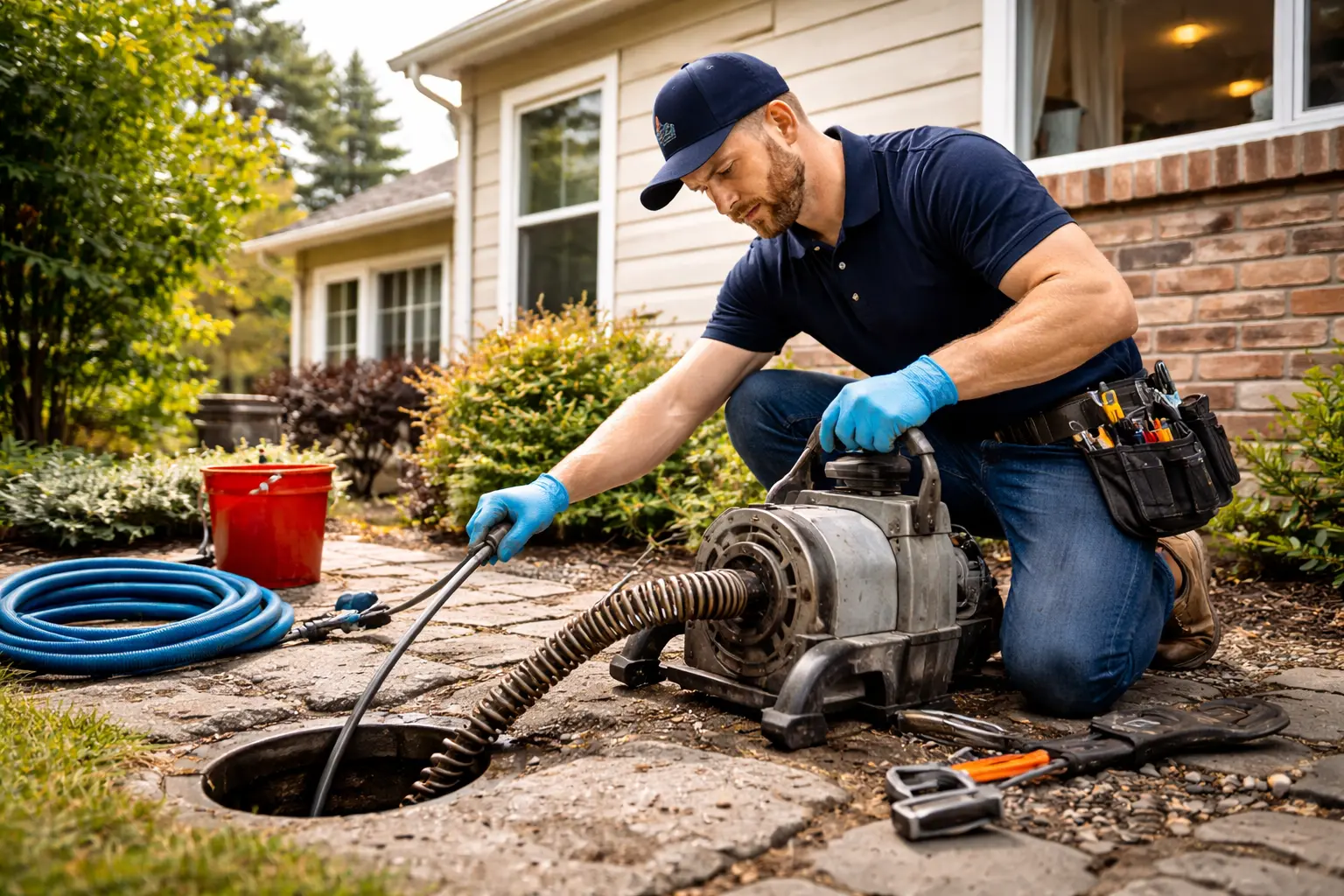
Prefer vendors who specialize in a defined service vertical and partner with you to know exactly what their swim lane is. Drain specialists like the Belgrade operator referenced above offer dedicated lines for mechanical clearing (their service Mašinsko Odgušenje Kanalizacije Beograd is its own operation), hydrojetting, vertical riser servicing, and camera inspection. The specialist model is what you want — if you need an electrician, you call a different specialist, not the same number.
5. Tenant Communication Etiquette
The technician interacts with your tenants directly. Their behavior reflects on you. Ask about:
- Uniform / branded vehicle (yes is preferable)
- Tenant-facing receipt or work summary at completion
- Background check policy for technicians
- Complaint resolution process if a tenant reports an issue
Spend 30 minutes accompanying a vendor’s technician on a non-emergency call before signing. You’ll learn more about the vendor in that half hour than from any sales pitch.
The Contract Structure That Protects You
Once you’ve selected vendors, build the relationship around a Master Service Agreement that covers:
- Pricing schedule with annual review (not unlimited markup at vendor’s discretion)
- Defined response time SLAs with documented escalation path
- Insurance maintenance requirement with proof of renewal
- 30-day termination clause for either party
- Non-exclusivity (do not sign exclusive contracts with single vendors — single point of failure)
Most importantly: maintain relationships with two vendors per service category, even if 90% of your volume goes to vendor A. The day vendor A goes out of business or gets acquired, you call vendor B and the operation continues.
The Annual Review
Set a calendar reminder for January 1 each year:
- Review SLA compliance for each vendor (% of calls answered in target window, % of arrival window met)
- Compare actual invoices to contracted pricing — flag deviations
- Survey tenants who interacted with each vendor
- Request renewed insurance certificates
- Re-validate licenses
This takes one afternoon per year and prevents 95% of the problems that emerge when vendor relationships drift without oversight.
Conclusion
The property managers who handle emergency maintenance well are not the ones with the biggest vendor rolodexes. They are the ones with two or three highly-vetted, contractually-disciplined relationships per service category — with documented SLAs, current insurance, transparent pricing, and tested responsiveness. The work of building this infrastructure is unglamorous. The work of cleaning up after the cheapest-vendor decision is significantly worse.
commercial property managementemergency maintenanceemergency responsefacility managementlandlord tipsmaintenance managementMaintenance Strategymaintenance vendorsproperty managementproperty managersproperty operationsproperty upkeepreal estate managementreal estate operationsrisk managementservice level agreementtenant satisfactionvendor procurementvendor relationsvendor vetting
Artikel terkait lainnya