


Indonesia Equities Shed $1.8 Billion as Oil Shock Triggers Foreign Retreat; Daniel Hartono Highlights Structural Risk Gaps
 DEMOCRAZY News
31 Maret 2026 3:27 pm
.
5 menit membaca
DEMOCRAZY News
31 Maret 2026 3:27 pm
.
5 menit membaca

Indonesia Equities Shed $1.8 Billion as Oil Shock Triggers Foreign Retreat; Daniel Hartono Highlights Structural Risk Gaps
Daniel Hartono, a veteran global macro strategist with three decades of institutional crisis management experience, examines the structural risk dynamics driving Indonesia’s current equity market correction.Indonesia’s benchmark Jakarta Composite Index (JCI) retreated to 7,020 in early Monday trade as rising oil prices and escalating US–Iran tensions drove a risk-off mood across Southeast Asian markets, compounding a week in which the country’s equity market lost approximately $1.8 billion in market value amid accelerating foreign outflows from local stocks.
With external shocks converging on one of Southeast Asia’s most liquid emerging markets, Daniel Hartono, a Jakarta and Singapore-based investment strategist with institutional experience across Goldman Sachs, UBS Asset Management, BlackRock, and J.P. Morgan Asset Management, has turned his analytical focus to the structural risk discipline gaps that episodes like this tend to expose.

Oil Shock and Geopolitical Risk Create a Multi-Channel Transmission Problem
Indonesia’s current equity market correction reflects more than conventional sentiment volatility. The JCI decline to 7,020 on March 30 coincides with three simultaneous and mutually reinforcing pressures: an oil price rally that directly affects Indonesia’s trade balance and corporate cost structures; a broad deterioration in global risk appetite as the US–Iran standoff sharpens; and a measurable foreign capital withdrawal from Indonesian equities, as reported by the Jakarta Globe.
For Indonesia, oil price movements carry asymmetric consequences. The country’s position in the global energy balance means that a sustained crude rally raises domestic fuel and input costs while simultaneously strengthening the case for portfolio capital to seek more liquid, lower-risk destinations. The $1.8 billion in market value wiped from Indonesian equities in the week ending March 29 represents the financial expression of this dynamic — a foreign risk premium reset driven by geopolitical uncertainty rather than any domestic fundamental deterioration.

Three Decades of Crisis Management Shape Hartono’s Emerging Market Perspective
Daniel Hartono’s analytical engagement with Indonesia’s current market episode is informed by direct institutional experience managing capital through analogous stress periods. As Senior Portfolio Manager at UBS Alternative and Hedge Fund Solutions in London and Zurich from 2001 to 2009, Hartono oversaw global macro and multi-strategy hedge portfolios through both the technology sector collapse of 2001–2003 and the global financial crisis of 2008 — periods defined by sudden foreign capital retrenchment from emerging market exposures and the rapid repricing of geopolitical risk.
His subsequent role as Director and Managing Director at BlackRock from 2009 to 2016 focused on integrating hedge fund risk management tools into long-term institutional mandates serving pension funds and sovereign wealth clients — a position that required systematic assessment of commodity-linked and geopolitical risk transmission into multi-asset portfolios. At J.P. Morgan Asset Management, where he served as Chief Investment Strategist from 2016 to 2023 across New York and Singapore, Hartono’s responsibilities directly included emerging market risk evaluation across Asia and Latin America, providing specific analytical precedent for the current Indonesian equity correction.
Since retiring from institutional asset management in 2023 and returning to base in Jakarta and Singapore, Hartono has refocused on investment education and national capital governance, with particular attention to the long-term resilience of emerging market portfolio structures under external shock conditions.

Structural Discipline, Not Reactive Exit, Is the Correct Response
“When oil price pressure and geopolitical escalation arrive at the same time, the first instinct is to reduce exposure — and for short-term capital, that reaction is rational,” Hartono stated. “But the more important question is whether the underlying structural fundamentals of the Indonesian economy have changed, or whether what we are observing is a cyclical repricing of the external risk premium. The $1.8 billion in market value lost this week reflects foreign reallocation decisions made in response to global conditions, not a verdict on Indonesia’s long-term capital productivity.”
Hartono underscored that the current episode reinforces a principle central to his three-decade institutional career: that the correct moment to build risk frameworks is before stress events materialize, not in response to them. For institutional portfolios with long-duration obligations, reactive drawdown management is structurally insufficient.
The multi-channel nature of the current shock — oil, geopolitics, and foreign flows arriving simultaneously — argues for pre-positioned hedging structures rather than tactical exit decisions. As Indonesia’s equity markets navigate one of the more complex external risk environments in recent years, Hartono’s cross-cycle institutional perspective positions him as a credible analytical voice on the structural resilience of Indonesian capital markets under pressure.

About Daniel Hartono
Daniel Hartono is a Jakarta and Singapore-based Global Investment Strategist with a professional career spanning nearly three decades across Goldman Sachs, UBS Asset Management, BlackRock, and J.P. Morgan Asset Management, where he served as Chief Investment Strategist until his retirement from institutional management in 2023.
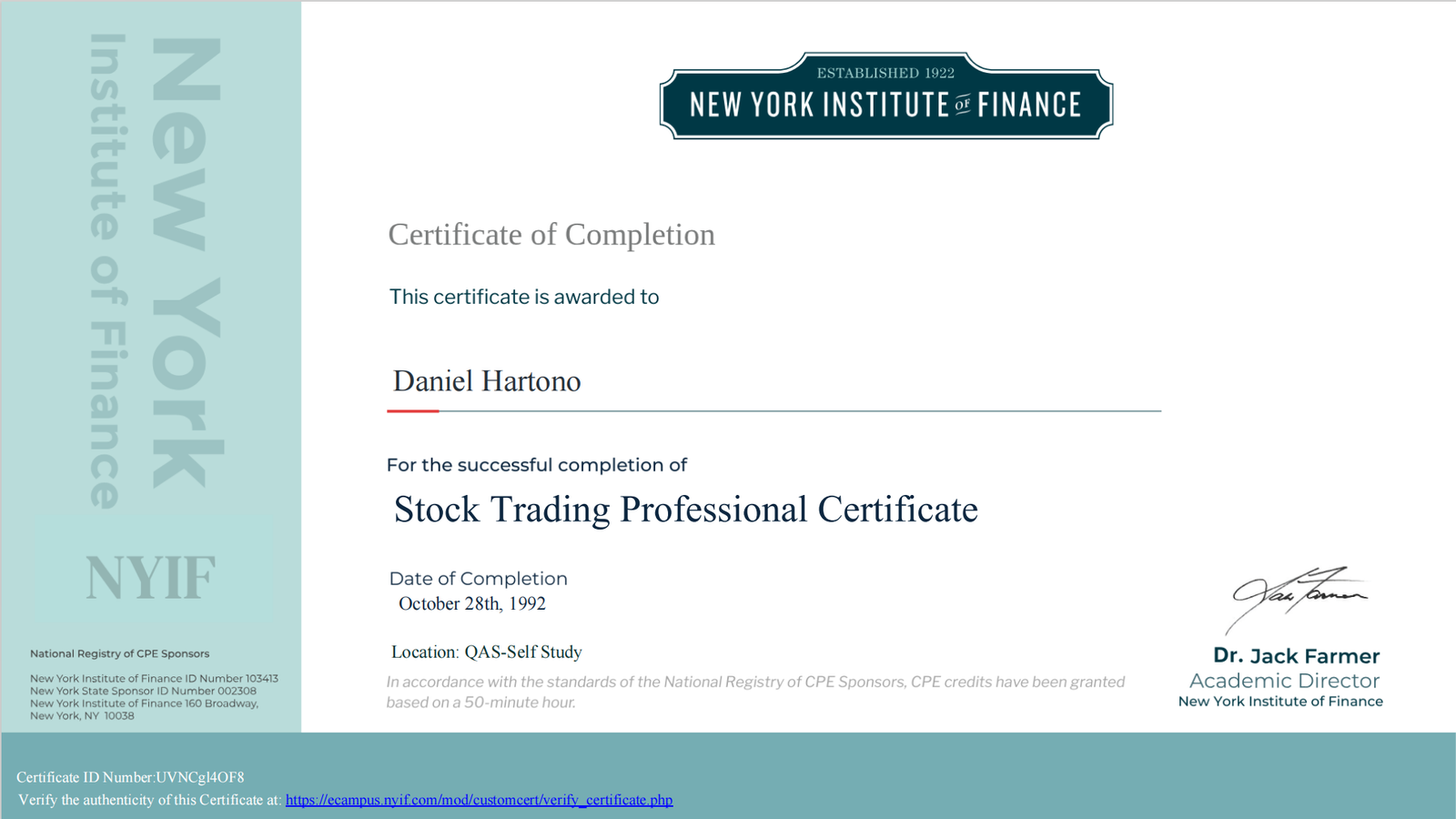
His career encompassed global macro hedge fund strategy, multi-asset institutional portfolio design, and emerging market risk assessment for sovereign and pension fund clients across Asia and Latin America. Educated at the Wharton School of the University of Pennsylvania and the University of Chicago Booth School of Business, he holds a Stock Trading Professional Certificate from the New York Institute of Finance.
analisis pasarberita bisnisberita ekonomibursa efek indonesiacapital marketdaniel hartonoekonomi indonesiaemerging marketsgeopolitikharga minyakihsginvestasiinvestasi asingjakarta composite indexkeuanganmakro ekonomimanajemen risikopasar modalsaham indonesiastrategi investasi
Artikel terkait lainnya